SwimSafer Assessment Day Checklist: What Parents Should Prepare
SwimSafer assessment day can feel more stressful than a normal swimming lesson because the child is expected to demonstrate skills with less prompting and under formal assessment conditions. The best preparation is not last-minute drilling. It is making sure the child already performs the required skills consistently, knows what to expect, and arrives with the correct items and enough time to settle.
For Singapore parents, a practical assessment-day plan has three parts: confirm readiness with the coach before registration, prepare the child and equipment before leaving home, and keep the final hours calm. The assessment should confirm skills already developed in lessons rather than become another training session.
Start With Readiness, Not the Assessment Date
A booked date does not make a swimmer ready. SwimSafer is progressive, and each stage has its own swimming, survival and water-safety requirements. The coach should judge whether the child can perform the relevant tasks safely and consistently before assessment.
Parents should ask specific questions before registration:
- Which components are already secure?
- Which component is least consistent?
- Can the child complete the sequence without repeated reminders?
- Does technique remain controlled when the child becomes tired?
- Has the child practised the relevant survival skills under realistic conditions?
- Is the applicable theory requirement understood?
This is more useful than asking whether the child has attended enough lessons. Two children with the same number of classes may have different levels of water confidence, coordination, endurance and independence.
Families who need an overview of the progression can review the SwimSafer programme in Singapore.
What to Prepare Before SwimSafer Assessment Day
Parents should follow the current instructions from the assessment organiser because requirements can vary by stage and assessment arrangement. Do not rely on an old checklist from a sibling’s previous assessment.
Confirm the stage and assessment details
Check the child’s registered SwimSafer stage, assessment date, reporting time and venue. Make sure the details match what the coach intended to register.
If the child normally trains at one pool, do not assume the formal assessment will necessarily be conducted there. Confirm the actual venue before the day.
Pack the required swimming items
Prepare the child’s normal swimwear and any clothing or equipment specified for the relevant stage. Later SwimSafer stages can include survival tasks performed in clothing, so the required items should be packed according to the organiser’s instructions.
A towel, change of clothes and normal personal items should also be prepared in advance. Packing the night before reduces the chance of creating unnecessary pressure immediately before leaving home.
Check goggles and familiar equipment
If goggles are permitted for a component, use a familiar pair that fits correctly rather than introducing new equipment on assessment day. Some survival components are performed without goggles, so the child should already have practised the relevant skills under those conditions during training.
Assessment day is not the time to discover that a swimmer becomes disoriented underwater without goggles.
What Parents Should Do the Day Before
The final day should be routine. Extra training is unlikely to create a major new skill overnight, but fatigue can affect performance.
Avoid turning the evening into a long technical revision session. If the coach has already established the child’s cues, adding new instructions can interfere with movements that were previously automatic.
A short review can focus on logistics and confidence:
- confirm the reporting time;
- pack the required items;
- remind the child to listen carefully to the assessor;
- reinforce that the goal is to demonstrate what has already been practised.
The child should arrive rested enough to concentrate and follow instructions.
Arrive Early Enough to Settle
Rushing into the venue can increase stress before the assessment starts. Arrive with enough time for the child to change, use the toilet if needed, organise belongings and understand where to report.
This does not mean arriving excessively early and leaving a young swimmer waiting nervously for a long period. The objective is a controlled transition from arrival to assessment.
Parents should also avoid using the waiting period to give a stream of technical reminders. A child trying to remember six new instructions may perform less naturally than one focused on the familiar cues used in training.
How to Handle Assessment-Day Nerves
Some nervousness is normal. Even confident swimmers may react differently when the setting feels formal.
Parents can help by keeping expectations specific. Instead of saying, “You must pass today,” focus on actions the child can control: listen to instructions, take time at the start, use the breathing pattern practised in training, and recover calmly if one movement feels imperfect.
A small mistake does not require panic. Swimming competency includes the ability to regain control. If the child has been prepared properly, the assessment should contain familiar tasks rather than surprises.
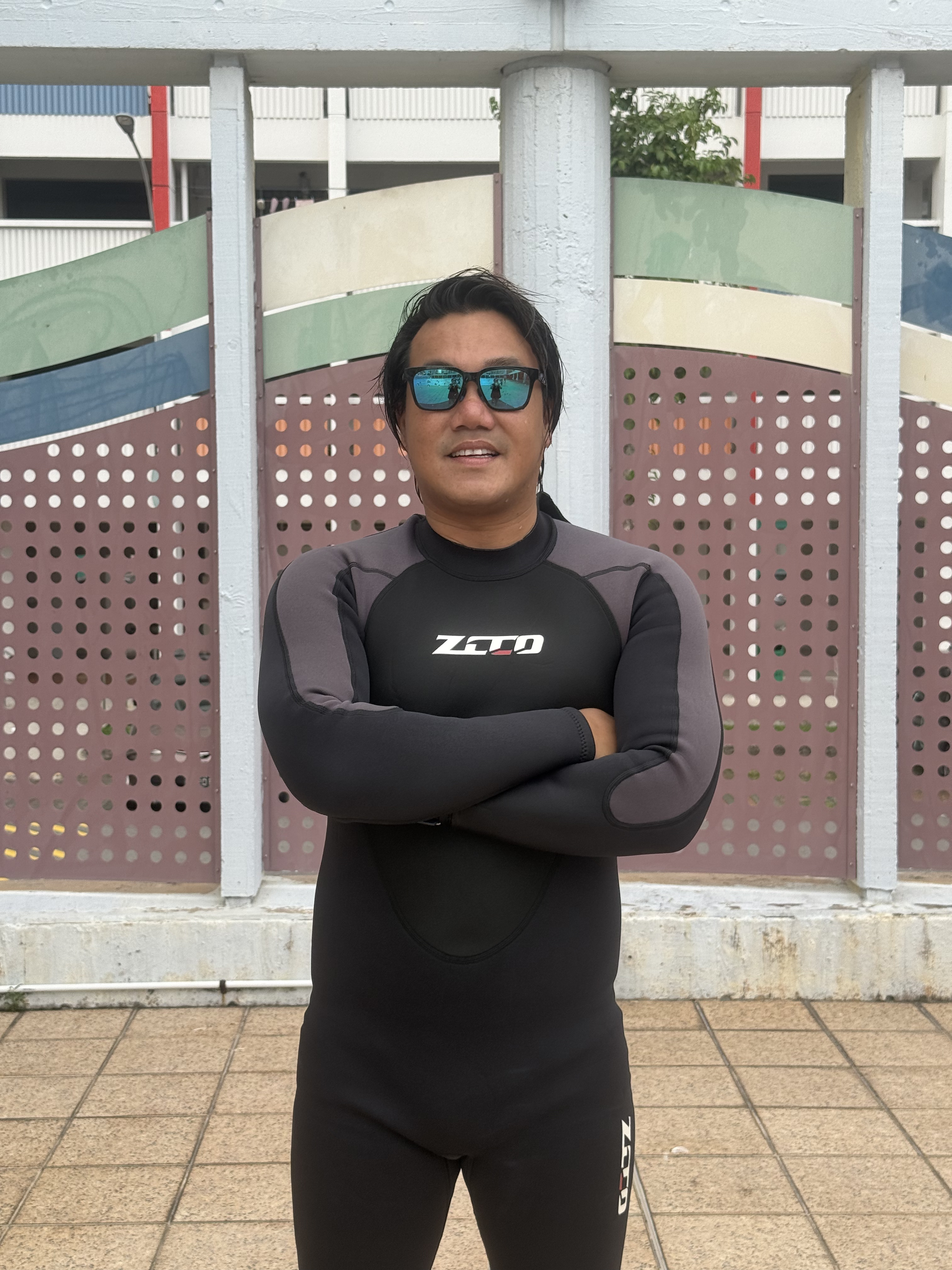
Coach Lee Yucong and the SWIM2000 coaching team use normal lesson performance to judge readiness before assessment, so the formal test should be approached as a demonstration of established ability.
Do Not Coach From the Poolside
Parents naturally want to help, but shouting technical instructions during an assessment can distract the swimmer and may conflict with the assessor’s directions.
The child needs to listen to the person conducting the assessment. Poolside coaching can make a young swimmer turn toward the parent, lose concentration or attempt to change technique halfway through a task.
Technical corrections belong in training. Once the assessment begins, the swimmer should rely on the skills and routines already developed.
Common Problems That Appear During Assessment
Starting too fast
Children sometimes interpret an assessment as a race and begin harder than they normally swim. That can create unnecessary fatigue during longer tasks.
Pacing should already have been practised in lessons. The child should know what controlled effort feels like rather than relying on excitement to carry the first part.
Forgetting a sequence
Later-stage survival work may require several actions in order. A swimmer can know each individual skill but still become confused during transitions.
This is why complete rehearsals are useful before assessment. The child should have experience moving from one component to the next without constant prompting.
Technique breaking down under fatigue
A swimmer may look technically competent over a short distance but lose body position, breathing rhythm or timing as effort accumulates.
If this repeatedly happens in training, the solution is not an assessment-day reminder. The underlying technique or endurance issue should be addressed beforehand. Where a persistent stroke fault is limiting progress, focused stroke correction may be relevant.
Anxiety without goggles or in clothing
Survival tasks can feel different from normal lessons. Clothing creates drag, and removing goggles changes visual comfort.
The first exposure to these conditions should happen during supervised preparation, not during the formal assessment.
What Happens After the Practical Assessment
Parents should follow the current instructions for the child’s assessment route. SwimSafer includes an applicable theory component in addition to practical competency, so completing the pool assessment does not necessarily mean every certification step is finished.
Check what needs to be completed after the practical assessment and whether any online theory action is required. Keep the relevant assessment information until the result and certification process are complete.
The administrative process should remain separate from the child’s technical development. Whether the child passes or needs another attempt, the useful next question is what the performance showed.
If Your Child Does Not Pass
A failed component is information. Ask the coach which requirement was not met and why.
The cause may be technical, physical or procedural. A swimmer may miss a standard because of inefficient breaststroke timing, weak endurance, uncertainty during a survival sequence or difficulty following the required order.
The next training block should address that cause rather than simply repeat the entire assessment over and over.
Parents should avoid framing another attempt as punishment or urgency. The relevant goal is stable competency. Once the weak component becomes reliable in ordinary lessons, reassessment becomes more meaningful.
Preparing Through Regular Lessons
Assessment preparation works best when it is integrated into normal development rather than compressed into the final week.
Children attending kids swimming lessons in Singapore can build stroke technique, confidence and water-safety skills progressively. Families in North Singapore can also review swimming lessons in Yishun and swimming lessons at Bukit Canberra when choosing a consistent training location.
Regular attendance gives the coach repeated evidence of whether a skill is truly secure. One successful attempt during a particularly good lesson is weaker evidence than consistent performance across several sessions.
Frequently Asked Questions
What should my child bring for a SwimSafer assessment?
Bring the items specified by the assessment organiser for the child’s stage, together with normal swimwear, towel and change of clothes. Later stages may require clothing for survival components. Follow the current assessment instructions rather than an old checklist.
Should my child practise on the morning of the assessment?
Extra last-minute training is usually unnecessary if the child is properly prepared. The assessment should test established skills. Avoid tiring the swimmer or introducing new technical changes immediately before the test.
Can parents give instructions during the assessment?
The child should listen to the assessor. Poolside technical coaching can distract the swimmer and conflict with the instructions being given.
What if my child is nervous?
Keep the focus on familiar actions: listening, controlled breathing, normal pacing and recovering calmly after mistakes. Avoid making the result the only measure of success.
Are goggles allowed during SwimSafer?
Requirements depend on the component and stage. Some survival tasks are performed without goggles. Follow the current assessment instructions and ensure the child has practised relevant no-goggle skills beforehand.
Does passing the practical assessment complete SwimSafer?
SwimSafer also includes an applicable theory component. Parents should follow the current instructions for the child’s assessment route and confirm that all required components are completed.
What should we do if my child does not pass?
Ask which specific requirement was not met. Training should then target the underlying issue before another assessment is attempted.
Treat Assessment Day as a Check of Existing Skills
The most useful SwimSafer assessment preparation happens before the final 24 hours. The child should already know the required skills, have practised relevant survival conditions and be able to perform with reasonable consistency.
On the day itself, parents can help by confirming logistics, bringing the correct items, arriving without rushing and avoiding last-minute technical overload. Once the assessment starts, the swimmer’s job is straightforward: listen, perform the familiar skills and stay composed.
A SwimSafer assessment is most meaningful when it confirms real competency. The certificate matters, but the stronger outcome is a swimmer who can repeat the skills safely after assessment day is over.
Ready to Start Swimming?
Book your first lesson with our certified coaches today. Suitable for all ages and skill levels.
Join Our Class NowTypically replies within minutes · No commitment required