
How to Choose the Right Swimming Coach in Singapore for Your Child
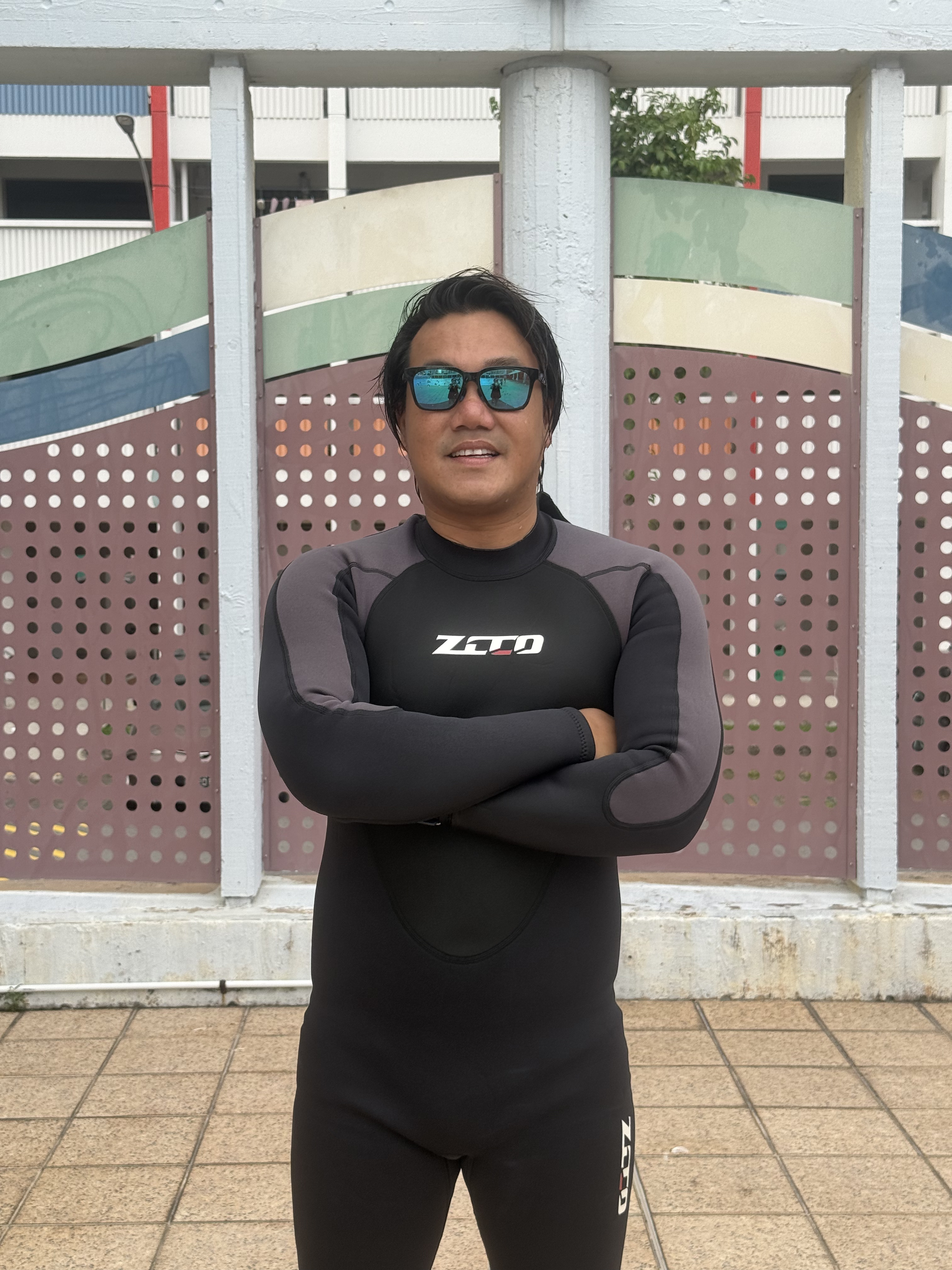
Choosing a swimming coach in Singapore involves more than comparing lesson prices, pool locations or available time slots. The coach directly affects how safely a child learns, whether the child develops correct technique and how confidently the child responds to challenges in the water.
A suitable coach should be able to manage safety, explain skills clearly, correct technical mistakes and adjust the lesson according to the swimmer’s age and ability. For parents, the practical question is not simply, “Is this coach experienced?” It is, “Can this coach help my child make safe, consistent and measurable progress?”
For families living in Yishun, Sembawang, Canberra and other parts of North Singapore, location is also important. Regular attendance becomes easier when lessons are held at accessible facilities such as Yishun Swimming Complex or Bukit Canberra Swimming Complex.
This guide explains what parents should assess when choosing a swimming coach in Singapore, including teaching methods, class size, water safety, SwimSafer preparation, communication and long-term swimmer development.
What Does a Swimming Coach in Singapore Actually Do?
A swimming coach teaches more than the four competitive strokes. For beginner children, the first responsibilities usually include helping them become comfortable in the pool, teaching safe entry and exit, developing breath control and building basic independent movement.
As the swimmer progresses, the coach introduces structured technical skills such as:
- Streamlined body position
- Floating and recovery
- Freestyle kicking and breathing
- Backstroke balance and rotation
- Breaststroke timing
- Butterfly body movement
- Treading water
- Survival swimming skills
- Deep-water confidence
- SwimSafer assessment preparation
A strong swimming coach should understand how these skills connect. For example, a child who cannot control exhalation underwater may struggle with freestyle breathing. A swimmer with weak body alignment may compensate by kicking excessively. A child who is nervous in deep water may perform well during normal practice but become anxious during an assessment.
The coach must identify the underlying cause rather than repeatedly asking the child to complete the same exercise.
Look for a Coach Who Prioritises Water Safety
Water safety should be the first consideration when choosing a swimming coach in Singapore.
Young swimmers must be supervised closely, especially when they are unable to stand comfortably in the teaching area. A coach should maintain awareness of every swimmer, organise the class clearly and avoid activities that leave inexperienced children waiting unsupervised in deep water.
Safety instruction should also be integrated into normal lessons. Children should learn how to:
- Enter the pool safely
- Identify pool depth
- Return to the wall
- Hold the pool edge securely
- Recover from an unexpected submersion
- Float or tread water when tired
- Respond to simple instructions
- Avoid unsafe jumping, pushing or running
- Recognise when they need assistance
These skills are particularly important for children who may visit public pools, condominiums, water parks or overseas resorts.
A child who can swim one length is not automatically water-safe. Swimming ability, survival ability and decision-making are related but separate areas of development.
Parents considering formal water-safety progression can review the SwimSafer programme in Singapore to understand how survival skills, stroke development and assessment requirements are structured.
Assess How the Coach Teaches Beginner Children
Beginner swimming lessons should be progressive. A coach should not force every child through the same sequence at the same pace.
Some children enter the pool confidently but lack coordination. Others understand instructions but become anxious when water touches their face. Some children can kick strongly while holding a board but cannot float independently.
A capable coach will break each skill into manageable steps.
For a fearful beginner, a typical progression may include:
- Sitting safely at the pool edge
- Entering with assistance
- Moving along the wall
- Pouring water over the arms and shoulders
- Blowing bubbles at the surface
- Submerging the mouth and nose
- Submerging the whole face
- Recovering to a standing position
- Floating with support
- Moving a short distance independently
The sequence may take one lesson for one child and several weeks for another. Progress should be evaluated according to skill mastery, not comparison with other swimmers.
Coach David Lim frequently works with beginner swimmers and children who require additional confidence-building. The objective is not to remove every sign of hesitation immediately. It is to help the child understand what to do, practise it safely and gain control through repetition.
Parents seeking structured beginner programmes can also review kids swimming lessons in Singapore.
Choose a Coach Who Corrects Technique Early
Incorrect technique can become more difficult to correct after it has been repeated for months.
Common examples include:
- Lifting the head too high during freestyle breathing
- Bending the knees excessively during flutter kick
- Pulling too wide in breaststroke
- Using a scissor kick instead of a symmetrical breaststroke kick
- Crossing the arms over the centre line in freestyle
- Dropping the hips during backstroke
- Forcing butterfly with the arms instead of using coordinated body movement
A coach should not merely tell the swimmer that the stroke is wrong. The coach should identify the specific movement causing the problem and provide an appropriate correction drill.
For example, a swimmer who struggles with freestyle breathing may not have a breathing problem. The actual issue may be poor body rotation, late exhalation or an unstable lead arm. Correcting only the head movement may not solve the full problem.
As the author of this article, Coach Lee Yucong places strong emphasis on stroke mechanics, body position and efficient movement. Swimmers who already know the basic strokes but continue to struggle with speed, breathing or coordination may benefit from a focused stroke correction clinic in Singapore.
Check Whether the Class Size Supports Effective Coaching
Class size affects how much observation and correction each swimmer receives.
A large class may appear active, but swimmers can spend significant time waiting for their turn. The coach may also have limited opportunities to identify small technical problems or adjust drills for different ability levels.
Smaller classes generally allow:
- More individual feedback
- Shorter waiting times
- Better safety supervision
- Faster correction of mistakes
- More appropriate skill grouping
- Greater lesson participation
- Clearer progress tracking
However, class size should be considered together with swimmer ability. Six independent intermediate swimmers may be easier to manage than four fearful beginners who cannot recover safely to the wall.
Parents should ask how students are grouped and whether the class contains swimmers with similar levels. Age alone is not a reliable grouping method. Two children of the same age may have very different water confidence, coordination and learning needs.
At SWIM2000, classes are structured around manageable group sizes so coaches can provide meaningful instruction rather than only supervise repetitive laps.
Observe Whether the Coach Is Actively Teaching
Parents can learn a great deal by observing one lesson.
An effective coach should be actively watching, explaining, demonstrating and correcting. The lesson should have a clear purpose rather than consist entirely of children swimming repeated lengths.
Signs of active coaching include:
- Giving one clear instruction at a time
- Positioning the swimmer correctly before starting
- Demonstrating the expected movement
- Correcting specific technical errors
- Adjusting drills when the swimmer is struggling
- Reinforcing successful execution
- Monitoring swimmers who are waiting
- Reviewing the skill before moving on
The coach should also know when to enter the water. In-water teaching can be useful for beginners, fearful children and swimmers who need physical guidance for body position or limb movement.
Standing on the pool deck is not inherently better or worse. The correct coaching position depends on the swimmer’s ability, lesson objective and safety requirements.
Ask How Progress Is Measured
Swimming progress should be measured through observable skills.
For a beginner child, useful milestones may include:
- Entering the pool independently
- Submerging the face without distress
- Exhaling continuously underwater
- Floating for five seconds
- Recovering from a float
- Kicking five metres with a stable body position
- Swimming a short distance without assistance
- Returning safely to the wall
For an intermediate swimmer, measurable outcomes may include:
- Completing a defined distance without stopping
- Maintaining legal breaststroke kick
- Breathing bilaterally in freestyle
- Improving stroke count
- Demonstrating effective treading water
- Completing SwimSafer survival sequences
- Improving timed performance
- Maintaining technique under fatigue
Parents should be cautious when progress is described only in broad terms such as “doing well” or “getting better.” Positive feedback is useful, but it should be supported by specific information.
Coach Neo Kah Heng works extensively on intermediate stroke development and breaststroke fundamentals. At this stage, progress often depends on improving timing and consistency rather than simply increasing distance.
Understand the Difference Between Learning to Swim and Preparing for SwimSafer
Swimming lessons and SwimSafer preparation overlap, but they are not identical.
General swimming lessons may focus on confidence, stroke development, fitness and technical improvement. SwimSafer includes specific assessment components such as survival skills, personal safety knowledge, flotation, deep-water activities and theory requirements.
A child may swim freestyle and breaststroke competently but still require preparation for:
- Entries into deep water
- Sculling
- Treading water
- Survival strokes
- Personal flotation device use
- Clothing-related survival tasks
- Sequence accuracy
- Theory questions
Parents should ask whether the coach follows a structured SwimSafer progression and whether the child will practise the exact skills required at the relevant stage.
The coach should also avoid rushing a swimmer into an assessment before the required skills are reliable. Passing an assessment is useful, but the underlying objective is genuine competence.
Consider the Coach’s Communication With Parents
Parents do not need a detailed report after every lesson, but they should receive meaningful information periodically.
Useful feedback may include:
- The current skill being taught
- A specific improvement observed
- A recurring technical problem
- A confidence or behaviour concern
- The next milestone
- Whether additional practice would help
- Whether the child is ready for assessment
- Whether the current class level remains suitable
Communication should be factual and proportionate. A child may have a poor lesson because of fatigue, illness, distraction or anxiety. One difficult session does not necessarily indicate a serious problem.
Likewise, one successful length does not always mean the skill is fully mastered. The coach should evaluate whether the child can repeat the skill consistently under normal lesson conditions.
Choose a Convenient Location for Consistent Attendance
Consistency is one of the strongest contributors to swimming progress.
A skilled coach cannot produce consistent results if the child attends irregularly. Long travel times, difficult parking and inconvenient lesson schedules may eventually cause missed sessions.
For families in North Singapore, common options include swimming lessons in Yishun and swimming lessons at Bukit Canberra.
Yishun Swimming Complex is accessible to families living around Yishun, Khatib and nearby neighbourhoods. Bukit Canberra Swimming Complex serves families from Canberra, Sembawang and surrounding residential areas.
A nearby programme can make weekly attendance more sustainable, especially for families managing school schedules, enrichment activities and multiple children.
Location should not be the only factor, but it has a direct effect on whether the child receives enough regular practice to progress.
Compare Coaching Quality, Not Only Lesson Price
Parents often compare swimming lessons according to monthly fees. Price is relevant, but it does not show how much useful instruction the child receives.
A lower-priced class may provide limited individual feedback. A more expensive programme may not necessarily be better if the class is too large or poorly structured.
A more practical comparison includes:
- Class duration
- Number of students
- Coach involvement
- Pool location
- Lesson frequency
- Make-up policy
- Coach continuity
- Assessment preparation
- Progress communication
- Technical correction
- Safety supervision
The useful measure is not simply cost per lesson. It is the quality of instruction and progress achieved over time.
Private lessons may be suitable for fearful swimmers, adults, children with specific technical problems or families requiring individual scheduling. Group lessons may be more appropriate for children who learn well with peers and benefit from structured social interaction.
Look for Long-Term Development, Not Only Short-Term Results
A child’s swimming development may continue for years.
The first stage may focus on water confidence. The next stage may involve independent movement and SwimSafer skills. Later stages may include stroke efficiency, endurance, competitive technique or performance development.
A coach should understand how early teaching affects later performance.
For example:
- Poor breaststroke kick mechanics may limit future speed.
- Weak streamline habits may reduce efficiency in every stroke.
- Inconsistent breathing control may affect endurance.
- Excessive reliance on kickboards may delay independent balance.
- Fear-based instruction may reduce long-term confidence.
- Rushing distance before technique may reinforce inefficient movement.
Coach Jack Lee brings a long-term coaching perspective developed through decades of teaching swimmers at different stages. Good coaching should not only help a child complete today’s exercise. It should build skills that remain useful as the swimmer advances.
Warning Signs Parents Should Take Seriously
Parents should review the programme carefully when they repeatedly observe:
- Poor supervision
- Children left unattended in deep water
- Frequent shouting or humiliation
- Forced submersion
- No adjustment for fearful swimmers
- Long periods of inactivity
- Unclear class grouping
- No technical feedback
- Repeated unsafe behaviour
- Constant coach changes
- Pressure to attempt assessments before readiness
- No explanation of progress over an extended period
A child may occasionally resist lessons or complain about difficult drills. That alone does not prove the coaching is unsuitable. Swimming requires effort, repetition and correction.
The concern is a consistent pattern in which the child is unsafe, receives little instruction or shows worsening fear without appropriate intervention.
Questions to Ask Before Enrolling
Before choosing a swimming coach in Singapore, parents can ask:
- What level is suitable for my child?
- How many swimmers are in the class?
- Are students grouped by age or ability?
- Does the coach enter the water for beginners?
- How is progress measured?
- Does the programme prepare students for SwimSafer?
- Which pool is used?
- What happens during bad weather?
- Is the same coach assigned regularly?
- How are fearful children supported?
- When will parents receive progress feedback?
- What should the child bring for the first lesson?
Clear answers help parents understand how the programme operates and whether it matches the child’s needs.
Parents can also review the general SWIM2000 frequently asked questions before registration.
Choosing a Swimming Coach in North Singapore
For parents living in Yishun, Sembawang or Canberra, the best swimming coach is not necessarily the coach with the most impressive title or the nearest available time slot.
The correct choice depends on whether the coach can:
- Keep the child safe
- Build confidence progressively
- Teach correct fundamentals
- Provide specific corrections
- Maintain an appropriate class size
- Prepare the swimmer for relevant assessments
- Communicate measurable progress
- Support long-term development
Parents should observe how the coach interacts with swimmers and whether the teaching approach matches the child’s current ability.
A beginner who is afraid of submerging needs a different lesson structure from an intermediate swimmer correcting breaststroke timing. An adult non-swimmer requires different explanations and pacing from a competitive child working on freestyle efficiency.
SWIM2000 provides structured swimming lessons across North Singapore, including Yishun Swimming Complex and Bukit Canberra Swimming Complex. Programmes cover beginner water confidence, children’s swimming development, SwimSafer preparation, adult learning and stroke correction.
Frequently Asked Questions
How do I choose a good swimming coach in Singapore?
Assess safety supervision, teaching clarity, class size, technical knowledge, progress measurement and the coach’s ability to work with your child’s current confidence level.
Should a swimming coach enter the water?
For beginners and fearful children, in-water instruction can help with confidence, body position and physical guidance. Deck-based coaching is often appropriate for independent swimmers.
What is a suitable class size for children?
The appropriate size depends on swimmer ability. Smaller classes generally allow more correction and supervision. Beginner classes should be especially manageable because swimmers may require closer assistance.
How long does a child take to learn swimming?
There is no fixed duration. Progress depends on age, attendance, water confidence, coordination, lesson frequency and the required standard. Initial independence may take weeks or months.
Is SwimSafer preparation included in normal swimming lessons?
Some programmes integrate SwimSafer skills, while others focus mainly on stroke development. Parents should confirm whether survival skills, theory and assessment sequences are specifically taught.
Should I choose private or group swimming lessons?
Private lessons provide individual attention and may suit fearful swimmers or specific technical needs. Group lessons can provide peer motivation and are suitable when swimmers are matched by ability.
Where can children attend swimming lessons in North Singapore?
Common locations include Yishun Swimming Complex and Bukit Canberra Swimming Complex, serving families in Yishun, Sembawang, Canberra and nearby areas.
What should I do if my child is scared of water?
Choose a coach who uses gradual exposure, clear instructions and controlled repetition. Forced submersion should not be used as a shortcut for building confidence.
How often should children attend swimming lessons?
One structured lesson per week is common. Consistent attendance is more important than occasional intensive practice. Additional supervised practice may accelerate progress.
When is a child ready for a SwimSafer assessment?
The child should be able to complete the required swimming, survival and theory components consistently without excessive prompting. Readiness should be based on demonstrated competence rather than time spent in lessons.
Ready to Start Swimming?
Book your first lesson with our certified coaches today. Suitable for all ages and skill levels.
Join Our Class NowTypically replies within minutes · No commitment required