Yishun SwimSafer: A Parent’s Guide to Stage 1 Lessons and Assessment Preparation
Parents searching for Yishun SwimSafer want to know whether their child is learning the right water-safety skills, how Stage 1 works and when an assessment should be attempted.
SwimSafer is Singapore’s national water-safety programme, structured across six progressive stages. A child should be registered only when the instructor judges that the child can handle the relevant swimming, safety and survival tasks confidently and safely.
For families living in Yishun, Sembawang, Canberra and other parts of North Singapore, a consistent training location can make preparation easier. SWIM2000 conducts swimming lessons in Yishun and follows a structured pathway that develops water confidence, movement skills, stroke foundations and readiness for the relevant SwimSafer stage.
What Does Yishun SwimSafer Mean?
“Yishun SwimSafer” commonly refers to SwimSafer-aligned swimming lessons attended by children in or around Yishun. The lessons may prepare a child for a SwimSafer assessment, but ordinary weekly training and the formal assessment are not the same event.
During lessons, children build confidence, breathing control, body orientation, safe entry and exit, forward and backward movement, survival awareness and continuous swimming. The instructor looks for consistent performance rather than one unusually good attempt.
The formal SwimSafer assessment checks whether the participant meets the applicable stage requirements under the national programme. For private assessments, registration and administration are handled through the Centralised Assessment Management System, commonly called CAMS. The assessment venue and arrangements depend on the available booking and the prevailing official process, so parents should not assume that training at Yishun Swimming Complex automatically means the assessment will be held at the same pool.
Families who want an overview of all six stages can read the SwimSafer programme guide before deciding which level is relevant.
What Children Build Toward in SwimSafer Stage 1
SwimSafer Stage 1 is designed to develop confidence and greater independence in water. It introduces foundational water-safety concepts and movement skills that support every later stage.
At this level, children work toward abilities such as safe entry and exit, controlled movement, body orientation, sculling-related control, personal water-safety awareness and continuous swimming. The official programme describes a goal of achieving 25 metres of continuous swimming at Stage 1. However, distance alone does not prove readiness. A child who can rush through 25 metres with poor control may still need more preparation.
Confidence Without Dependence
A beginner may initially rely on the pool wall, an instructor’s hand or repeated verbal reassurance. Stage 1 preparation gradually reduces that dependence. The aim is not to force a frightened child into deeper water, but to build enough familiarity that the child can follow instructions and perform skills without panic.
Parents should look for calm behaviour as well as physical ability. Recovering balance and following instructions after water reaches the face are useful signs of confidence.
Controlled Movement, Not Just Speed
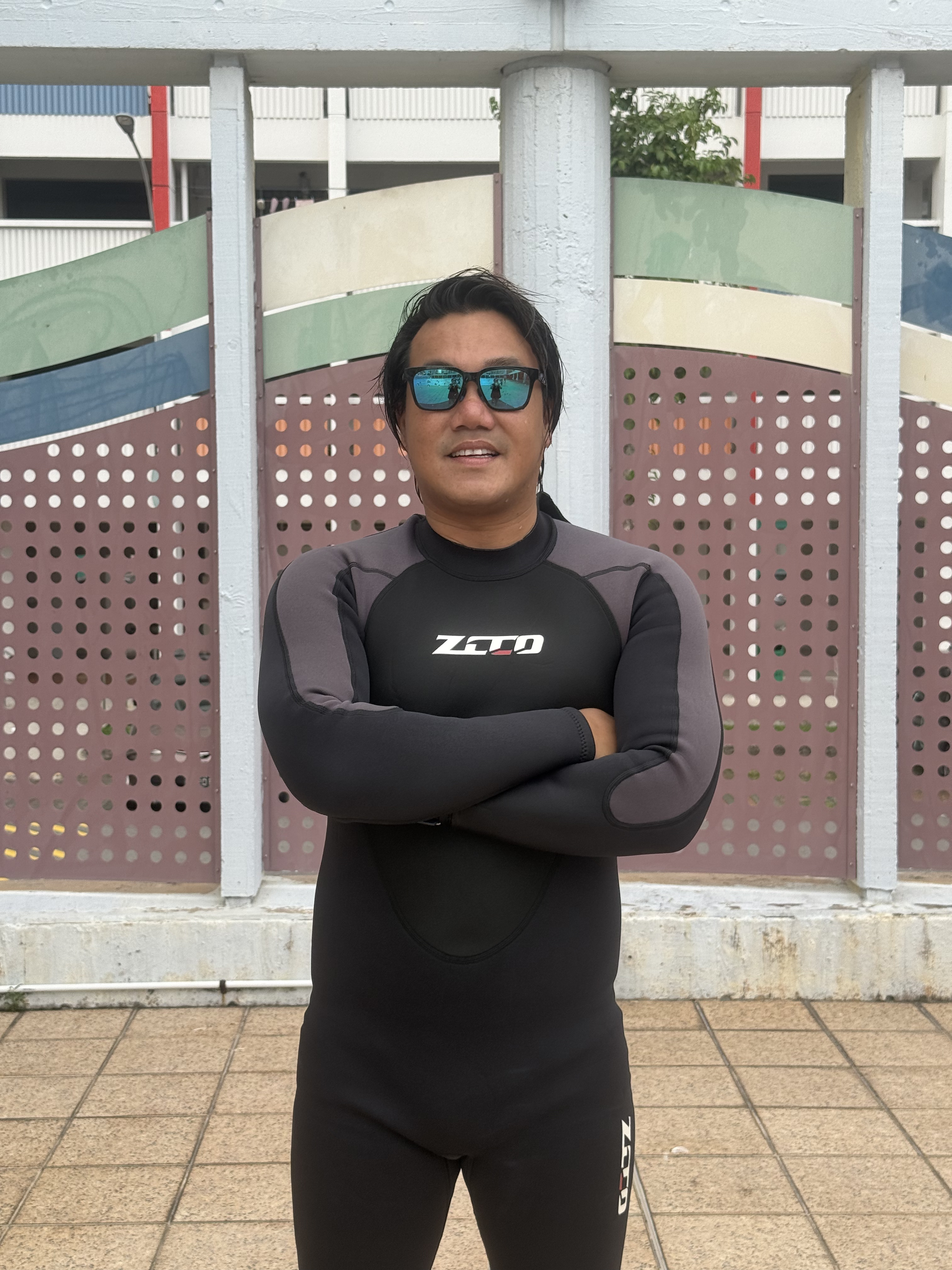
Young swimmers often try to solve every task by kicking harder. Good preparation instead develops balance, breathing and deliberate movement. Coach Lee Yucong and the coaching team focus on skills that remain useful beyond a single test.
Basic Water-Safety Understanding
Stage 1 is also about safe behaviour around aquatic environments. Children should learn to listen to instructions, enter and leave the water appropriately and understand that swimming ability does not remove risk.
The theory component reinforces this knowledge. Parents can support it by discussing simple situations: asking permission before entering a pool, following lifeguard instructions, avoiding dangerous play and seeking adult help during an emergency.
SwimSafer Stage 1 Lessons Versus the Stage 1 Test
Weekly lessons are where the child learns, practises and corrects skills. The SwimSafer Stage 1 test is where readiness is assessed.
A responsible instructor should not register a child merely because a convenient assessment date is available. Current official guidance emphasises that validation is a professional judgement. The instructor should be satisfied that the participant is adequately prepared, can participate safely and is likely to manage the required tasks with confidence appropriate to the stage.
Two children who start together may therefore be assessed at different times. Attendance, water confidence, coordination and prior experience all affect progression.
Parents should ask a more useful question than “How soon can my child take the test?” Ask:
“Which skills are already consistent, and which skills still need work before assessment?”
That question encourages an evidence-based discussion and reduces pressure on the child.
How to Prepare a Child for Yishun SwimSafer Lessons
Parents do not need to conduct technical coaching outside class. The best support is usually simple and consistent.
Attend Regularly
Long gaps can reduce a beginner’s confidence and timing. Regular attendance lets the coach build from the previous session.
Arrive Ready to Learn
Bring suitable swimwear and requested equipment, and arrive early enough for the child to settle before class.
Avoid Promising a Pass Date
Statements such as “You must pass this month” can create unnecessary tension. Progress is better measured by observable improvements: entering independently, recovering balance, swimming farther with control or following safety instructions more confidently.
Discuss Water Safety at Home
Parents can reinforce the theory component through short water-safety conversations rather than last-minute memorisation.
Let the Coach Judge Readiness
Assessment readiness should be based on consistent performance and safety, not comparison with classmates.
For children who are still building confidence, the kids swimming lessons programme explains how structured lessons can support beginners before formal assessment.
How the SwimSafer Assessment and Theory Quiz Work
SwimSafer certification requires completion of the relevant practical and theory components. For private assessments managed through CAMS, parents should follow the latest instructions displayed on the official platform and provided by their recognised SwimSafer coach.
Under the current official process, private-assessment registration and payment are completed before the assessment closing deadline. The official SwimSafer information presently advises completion three weeks before the assessment date. The online theory quiz is then completed through CAMS within the stated period after the practical assessment, currently within seven days.
Results and certificate availability depend on successful completion of both components. Current official information states that private-assessment results are made available through CAMS and that certificates for private assessments from July 2025 onward can be retrieved there.
Processes can change, so parents should rely on current CAMS instructions and guidance from the recognised coach rather than old screenshots or forwarded messages.
Common Mistakes Parents Should Avoid
Treating SwimSafer as a Race
A faster certificate does not necessarily mean a stronger swimmer. Stable breathing, body control and safe decisions build a better foundation.
Focusing Only on Distance
Continuous swimming matters, but technique, confidence, safety and task execution also matter. Distance achieved through panic or exhaustion is not the same as controlled swimming.
Booking Before the Child Is Ready
Premature assessment can cause distress and may place the child in an environment that exceeds current ability. The coach should validate registration only after judging the participant ready.
Ignoring the Theory Requirement
Passing the practical component alone is not enough for certification. Parents should check the correct theory-quiz process for the child’s assessment route and complete it within the applicable timeframe.
Comparing Different Children
Children progress differently. A cautious beginner may require more familiarisation but later develop excellent technique. Another child may cover distance quickly while still needing work on control or safety awareness.
Choosing SwimSafer Lessons in Yishun
Yishun Swimming Complex is convenient for many families near Yishun, Northpoint and surrounding neighbourhoods. A manageable weekly journey supports consistent attendance.
When comparing programmes, parents should consider:
- whether the lessons build genuine water confidence and safety;
- whether the coach explains the child’s current stage clearly;
- whether technique is corrected instead of merely completing distance;
- whether assessment is recommended based on readiness;
- whether the programme offers a pathway beyond Stage 1.
A good pathway builds a safer and more capable swimmer, not merely familiarity with a test sequence. Families closer to Canberra or Sembawang can review swimming lessons at Bukit Canberra as another North Singapore option.
What Comes After SwimSafer Stage 1?
Stage 1 is the beginning of a six-stage progression. Later stages introduce longer continuous swimming, stronger stroke development, additional entries, underwater skills, survival techniques and rescue-related knowledge.
A strong Stage 1 foundation makes those later demands easier. Children who learn controlled breathing, balance and correct movement early are less likely to rely on inefficient habits when distances increase.
The next step should be based on the child’s skills, confidence and interest. Some continue through SwimSafer for general proficiency, while others later pursue stroke improvement or competitive development. The immediate priority is a calm, competent and increasingly independent swimmer.
Frequently Asked Questions
Is SwimSafer available through swimming lessons in Yishun?
Children can attend SwimSafer-aligned preparation through suitable swimming lessons in Yishun. Formal assessment registration, venue and administration follow the prevailing official SwimSafer and CAMS process.
What is tested in SwimSafer Stage 1?
Stage 1 develops water confidence, safe entry and exit, body orientation, movement, personal water safety and continuous swimming. The official programme identifies 25 metres of continuous swimming as one Stage 1 goal, but readiness involves more than distance alone.
How do I know whether my child is ready for the SwimSafer Stage 1 test?
The coach should see consistent, safe and confident performance across the required competencies. Ask which skills are already stable and what still needs improvement before registration.
Does my child need to complete a SwimSafer online quiz?
Yes. Certification requires the relevant theory and practical components. Private assessments use the CAMS theory-quiz process, while school-based arrangements may follow the official MOE route.
Is the SwimSafer assessment held at Yishun Swimming Complex?
Not necessarily. Training may take place in Yishun, but the assessment venue depends on registration arrangements, available assessment slots and current official requirements.
How long does it take to pass SwimSafer Stage 1?
There is no responsible universal timeframe. Progress depends on starting ability, confidence, attendance, coordination and consistency. Readiness should be based on demonstrated skills rather than a promised deadline.
Where can parents ask more questions?
Parents can review the programme details on the SWIM2000 website or visit the swimming lessons FAQ. For official assessment procedures, CAMS registration and certification requirements, follow the latest SportSG and Singapore Aquatics guidance.
Ready to Start Swimming?
Book your first lesson with our certified coaches today. Suitable for all ages and skill levels.
Join Our Class NowTypically replies within minutes · No commitment required