Why Your Child's Swimming Coach Matters More Than the School
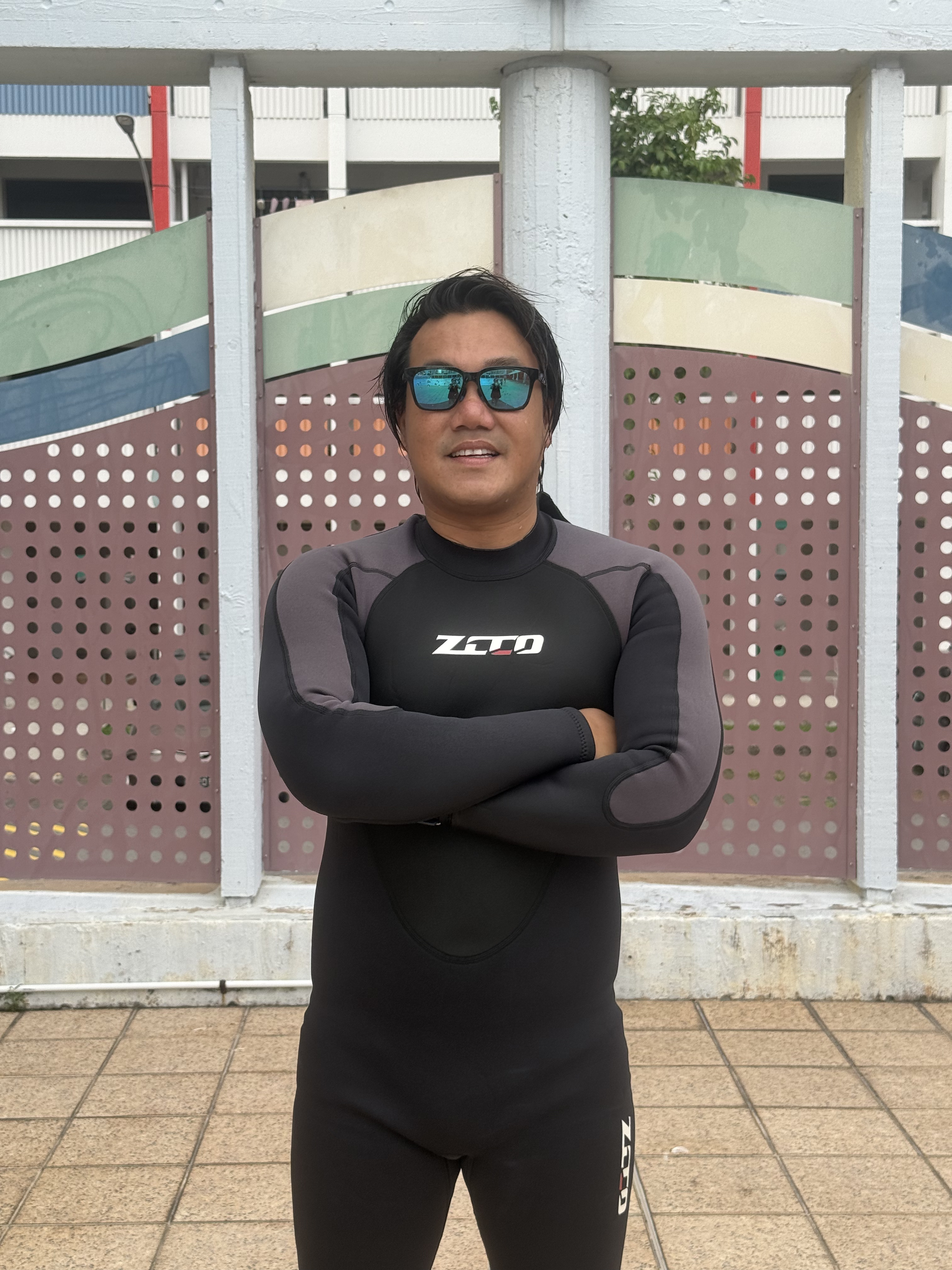
Most parents choose a swimming school based on price, location, and slot availability. The two factors that actually determine long-term outcomes — the coach and the structure behind them — rarely enter the conversation at all. Coach Lee Yucong, who represented Singapore at the SEA Age Group Championships, explains why both matter.
When parents search for swimming lessons in Singapore, the process usually looks the same:
- Which pool is nearest?
- Which class fits the schedule?
- Which school has available slots?
- Which one is cheaper?
Very few parents begin by asking:
Who will actually be teaching my child every week — and what happens when they advance?
Those questions matter more than the logo, the brand name, or even the pool itself.
Because children do not learn swimming from a company.
They learn swimming from a coach operating inside a system.
The quality of that coach determines whether your child builds correct technique. The quality of that system determines whether they keep building it — all the way from water confidence to advanced stroke proficiency — without gaps, restarts, or lost progress along the way.
Getting only one of those right is not enough.
This is why SWIM2000 structures lessons around both: a team of coaches with clearly defined specialisations, and a mapped aquatic pathway that connects every stage of development from beginner to Gold.
A Swimming School Does Not Teach Your Child. A Coach Does.
This sounds obvious, but many parents unintentionally outsource the most important part of the decision.
A swim school is ultimately an organisation. Some are large. Some operate across dozens of pools. Some manage hundreds of coaches. Some focus heavily on convenience and scale. Singapore has no shortage of swimming schools operating islandwide.
But from the child’s perspective, the experience comes down to one person standing in front of them every week.
That coach determines:
- how breathing is taught,
- how confidence is built,
- whether bad habits are corrected early,
- whether fear of water is handled properly,
- and whether the child actually enjoys learning.
A strong coach can produce excellent swimmers in an ordinary environment.
A weak coach can waste years even within a famous swim school.
But there is a second side to this that parents rarely consider.
Even an excellent coach, operating without a clear developmental structure, will eventually produce inconsistent results. Swimming is a multi-year progression. A child who learns well at Stage 1 still needs a coherent pathway to Stage 6 — and that pathway needs to be designed, not improvised.
The schools that produce the strongest swimmers over time are usually those where strong individual coaches operate inside a structured system: defined stage progressions, specialist coaches at the right levels, deliberate handoffs between instructors, and consistent technical language across the team.
That combination — quality coach plus quality structure — is what makes development compound rather than stall.
Technique Is Either Built Correctly Early — Or Corrected Expensively Later
One of the biggest misconceptions parents have is believing that all beginner swimming instruction is fundamentally similar.
It is not.
Swimming is heavily technical. Small mistakes repeated weekly become deeply ingrained movement patterns.
Examples include:
- breaststroke kicks that create drag instead of propulsion,
- freestyle breathing that collapses body position,
- incorrect timing between arm pull and glide,
- excessive head lifting,
- poor body alignment in the water.
These habits become muscle memory.
And muscle memory is extremely difficult to overwrite later.
This is why experienced coaches often care more about how a child learns rather than how quickly they clear SwimSafer stages.
Coach Lee Yucong explains it this way:
A bad habit corrected in three weeks is easy. The same habit corrected after three years becomes frustrating for both swimmer and coach.
This principle applies to all levels.
Children who learn strong fundamentals early usually progress smoothly through SwimSafer, endurance swimming, and advanced strokes later.
Children rushed through beginner stages without proper correction often plateau around Stage 3 or Stage 4.
Consistency Matters More Than Parents Realise
Another overlooked factor is coaching continuity.
Many large-scale swimming operations rotate instructors depending on scheduling, manpower deployment, or outlet allocation. This is structurally common in high-volume coaching models.
The issue is not whether those coaches are certified.
The issue is continuity.
Children learn fastest when:
- the same coach tracks their progress weekly,
- corrections remain consistent,
- lesson progression compounds properly,
- and the instructor already understands the child’s personality, fears, strengths, and habits.
Every coach teaches slightly differently.
When instruction changes too frequently, technical correction becomes inconsistent. Children receive mixed cues, different terminology, and different movement emphasis.
That slows progression dramatically.
This is especially true for:
- water-shy children,
- very young beginners,
- and children struggling with breathing rhythm.
Consistency builds trust.
Trust accelerates learning.
When Coach Transitions Are Intentional, They Work Differently
There is an important distinction between random instructor rotation and deliberate stage-based handoffs.
Random rotation — where a child gets whoever is available that week — fragments progression. Deliberate handoffs, where a child advances to a specialist coach at the right stage, is how structured development programmes operate.
At SWIM2000, the coaching team is built around this principle. Foundation stages are taught by coaches who specialise in building water confidence and fundamental movement patterns. As children progress toward SwimSafer Bronze, Silver, and Gold, they move toward coaches with the technical depth and assessment experience those stages demand.
Coach Neo Kah Heng — a CAMS-registered SwimSafer assessor — leads Stage 4 Bronze work. Coach Jack Lee, with over 50 years of coaching experience spanning national-level competitive development, leads Stages 5 and 6.
When children transition between these coaches, they are not starting over. The transition is coordinated. Technical language stays consistent. Correction patterns carry forward. The child simply gains access to deeper specialist knowledge at the level where it is most needed.
That is the structural difference between a well-designed aquatic pathway and a school that simply fills slots.
Certifications Matter. But Experience Interpreting Movement Matters More.
Singapore has many certified swimming coaches. Certifications are important and necessary.
But parents should understand something important:
Certification alone does not automatically produce a technically strong coach.
A coach who has personally trained and competed at high levels develops a different understanding of movement efficiency, stroke mechanics, and error detection.
That difference becomes obvious during technical correction.
For example:
An inexperienced coach may tell a child:
Kick harder.
An experienced technical coach may immediately recognise:
- ankle flexion angle is incorrect,
- knees are separating too widely,
- glide timing is too short,
- hips are dropping during recovery,
- or breathing timing is disrupting body position.
Those are entirely different levels of diagnosis.
This is one reason many advanced swimmers later seek specialised stroke correction coaching after years of standard lessons.
Even across well-regarded Singapore swim schools, technical coaching quality still varies heavily at instructor level.
The SWIM2000 Coaching Team: Credentials Across the Full Pathway
Parents evaluating coaching quality should look at the team as a whole, not just the lead coach.
At SWIM2000, the coaching team collectively brings:
- Coach Lee Yucong — national competitive swimmer, SEA Age Group Championships representative, specialises in foundation and stroke development for Stages 1–3
- Coach David Lim — coaching since 2008, strong technical background in breaststroke timing and fundamentals, Stages 2–3
- Coach Neo Kah Heng — CAMS-registered SwimSafer assessor, 18+ years of experience, former competitive swimmer and water polo player at National School Games level, Stage 4 Bronze
- Coach Jack Lee — over 50 years of coaching experience, former Singapore Army Physical Training Instructor, national-level swimmer development, NROC certified, Stages 5–6 Silver and Gold
Each coach operates at the level where their specific background produces the most impact.
That specialist alignment — rather than generalist deployment — is what makes stage-to-stage progression coherent rather than fragmented.
The Aquatic Pathway: What Structured Progression Actually Looks Like
Most parents think about swimming lessons in terms of individual classes.
The more productive frame is: what is the full development pathway my child will follow — and is it clearly designed?
A well-structured aquatic pathway looks like this:
- Water confidence and safety fundamentals — Stage 1, building trust in the water before any stroke work begins
- Fundamental movement and basic propulsion — Stage 2, 25m swimming, breathing control, basic endurance
- Stroke development and technical correction — Stage 3, freestyle and backstroke with consistent habit correction
- SwimSafer Bronze and real-world survivability — Stage 4, clothed swimming, treading water, deep-water independence
- Stroke refinement and endurance — Stage 5 Silver, efficiency and stamina over longer distances
- Advanced proficiency and competitive readiness — Stage 6 Gold, 400m swimming, butterfly, rescue competency
Each stage builds directly on the last.
But that only works if the technical standards were properly established at each prior stage.
A child pushed through Stage 2 before breathing is truly consistent will struggle at Stage 3. A child pushed through Stage 3 before freestyle mechanics are clean will fatigue at Stage 4 distances.
The SWIM2000 Aquatic Roadmap maps out exactly how this progression works in practice — from the first lesson through to the competitive track.
The Best Swim Coach for Your Child May Not Be the Biggest Swim School
Parents often assume bigger means better.
Sometimes it does.
But not always.
Large schools are usually optimised for:
- operational scale,
- scheduling flexibility,
- coach deployment,
- and broad programme coverage.
None of those automatically guarantee coaching chemistry or technical fit for your child.
Some children thrive under energetic, fast-paced coaching.
Others need calmer progression and slower confidence building.
Some need strict technical correction.
Others need emotional encouragement first before technique can even begin.
The “best” swim coach is therefore not universal.
The best coach is the one whose teaching style matches your child’s learning style.
That requires parents to evaluate the instructor directly — not just the brand behind them.
What Parents Should Actually Look For When Choosing a Swim Coach
1. Does the Coach Explain Clearly?
A good coach simplifies complex movement into language children understand.
Children should not look confused for most of the lesson.
2. Does the Coach Correct Technique Continuously?
If a lesson consists mostly of children swimming laps without correction, technical development is limited.
Good coaches are constantly observing and adjusting.
3. Does the Coach Remember Previous Mistakes?
Progressive coaching compounds corrections week after week.
Strong coaches build from previous sessions instead of restarting every lesson.
4. Does the Child Feel Safe?
Fear slows learning more than lack of ability.
Especially for beginners, emotional safety matters enormously.
5. Is the Coach Personally Invested?
The strongest coaches genuinely care whether children improve.
You can usually tell within two or three lessons.
6. Is There a Clear Progression Pathway?
Ask what happens after the beginner stage.
A school with a clearly defined aquatic pathway — where each stage has defined objectives, specialist coaching, and a deliberate handoff process — will produce better long-term results than one that treats every lesson as a standalone class.
Progression should be predictable, even if the pace varies by child.
Why Many Adult Swimmers Still Carry Childhood Technical Problems
One of the clearest proofs of coaching quality appears years later.
Adult swimmers who learned through technically weak instruction often still:
- struggle with breathing,
- fatigue quickly,
- use inefficient kicks,
- or swim with excessive tension.
Many eventually seek private stroke correction later in life.
This is why SWIM2000 places such strong emphasis on learning proper movement patterns early.
Swimming is a lifelong skill.
The foundation phase matters disproportionately.
See:
The Goal Is Not Just Passing SwimSafer
Passing SwimSafer is important.
But parents should ask a bigger question:
“What kind of swimmer will my child become after the certificate?”
A child can pass assessments while still carrying poor long-term mechanics.
The stronger goal is building:
- comfort in water,
- efficient movement,
- technical confidence,
- endurance,
- and long-term swimming literacy.
That requires coaching quality.
Not just attendance.
Final Thoughts
Most parents spend more time comparing swim schools than evaluating coaches or asking about structure.
In practice, two things determine nearly everything that matters:
The coach — who determines confidence, technique, correction quality, and whether the child actually develops.
The structure — which determines whether that development compounds properly across stages, or resets every time a child advances.
The school organises the lesson.
The coach shapes the swimmer.
The pathway determines how far that swimmer goes.
All three matter.
At SWIM2000, lessons at Yishun Swimming Complex and Bukit Canberra Swimming Complex are taught by a specialist coaching team — Coach Lee Yucong, Coach David Lim, Coach Neo Kah Heng, and Coach Jack Lee — across a clearly mapped aquatic pathway from Stage 1 through Stage 6.
Technique-first instruction. Deliberate stage transitions. Consistent standards throughout.
Because children only learn swimming fundamentals once.
It is worth learning them properly the first time.
Related Reading
- Swimming Lessons at Yishun Swimming Complex
- SwimSafer Programme Singapore
- Meet the SWIM2000 Coaches
- Yishun Swimming Complex: A Parent’s Complete Guide (2026)
WhatsApp SWIM2000 at +65 9817 2710 to arrange a free assessment for your child.
Ready to Start Swimming?
Book your first lesson with our certified coaches today. Suitable for all ages and skill levels.
Join Our Class NowTypically replies within minutes · No commitment required