Water Confidence for Kids: Why It Matters More Than Swimming Strokes in the Early Stages

Why Water Confidence Is the Real Foundation of Swimming
When parents begin researching swimming lessons, many focus on swimming strokes.
Questions often include:
- When will my child learn freestyle?
- How quickly can my child learn breaststroke?
- How long will it take to pass SwimSafer?
These are understandable questions.
However, experienced swimming coaches often focus on something else first.
Water confidence.
Before a child can swim efficiently, learn breathing techniques, or progress through SwimSafer stages, they must first become comfortable in the water.
For many children, water confidence is the single most important factor influencing long-term swimming success.
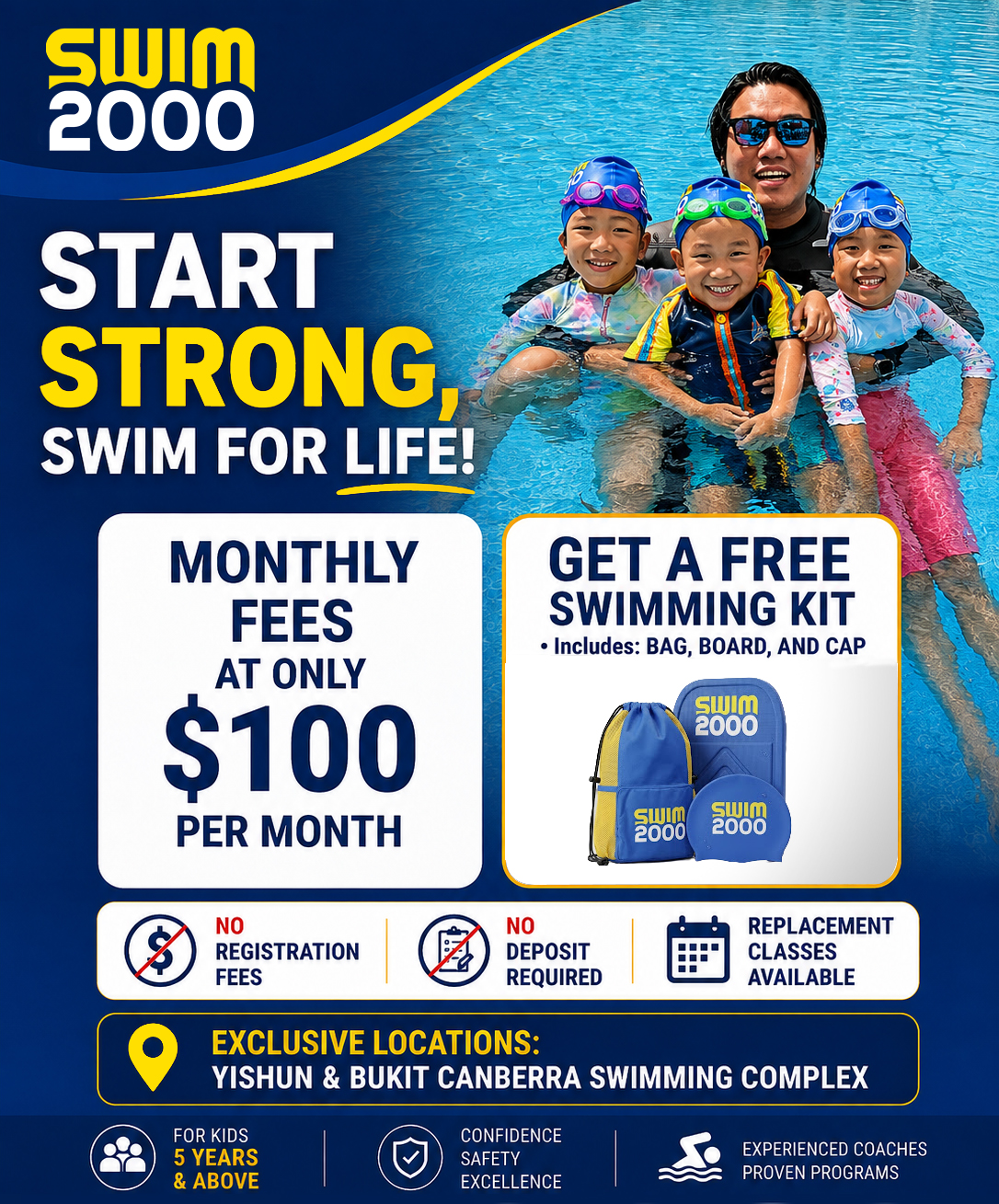
At SWIM2000, programmes conducted at Yishun Swimming Complex and Bukit Canberra Swimming Complex place significant emphasis on confidence-building during the early stages of learning.
Children who develop strong water confidence often learn faster, enjoy lessons more, and demonstrate greater long-term retention of swimming skills.
What Does Water Confidence Actually Mean?
Water confidence is frequently misunderstood.
It does not mean a child can already swim.
It means a child is comfortable enough in the water to learn effectively.
Water confidence typically includes:
- Entering the water without fear
- Putting the face into the water comfortably
- Floating with relaxation
- Following instructions calmly
- Remaining composed when submerged
- Recovering independently after simple aquatic tasks
Children with strong water confidence often display curiosity and willingness to attempt new skills.
Children without confidence may hesitate even when they possess the physical ability to perform the task.
Why Some Children Fear Water
Parents often worry when a child appears afraid of swimming lessons.
In most cases, this is completely normal.
Fear of water can develop from several causes.
Limited Water Exposure
Some children have had very little experience in pools before beginning lessons.
Everything feels unfamiliar.
Sensory Discomfort
Water entering the eyes, ears, or nose can initially feel uncomfortable.
Previous Negative Experiences
A frightening incident, even a minor one, can influence future confidence.
Personality Differences
Some children naturally approach new experiences cautiously.
Others adapt quickly.
Neither response is unusual.
The important factor is providing gradual, positive exposure.
Why Water Confidence Comes Before Freestyle
Many parents expect swimming lessons to begin with swimming strokes.
However, stroke development becomes significantly easier when confidence already exists.
A child who is relaxed in water can:
- Focus on instructions
- Control breathing
- Maintain body position
- Coordinate movements
A fearful child often struggles with all four.
This is why many lessons focus on:
- Floating
- Breath control
- Submersion
- Balance
before introducing advanced freestyle mechanics.
At SWIM2000, coaches such as Coach David Lim and Coach Jack Lee frequently work with beginners using structured confidence-building progressions.
The Link Between Water Confidence and SwimSafer Success
Parents researching the SwimSafer programme often focus on assessment outcomes.
However, confidence remains one of the strongest predictors of SwimSafer progression.
Children who are comfortable in water generally find it easier to:
- Float independently
- Perform survival skills
- Learn stroke mechanics
- Demonstrate water safety competencies
Many difficulties observed during SwimSafer assessments originate from confidence limitations rather than technical weaknesses.
This is particularly true during the earlier stages of development.
Common Confidence-Building Activities
Swimming coaches use various exercises to build confidence progressively.
Bubble Blowing
Children learn controlled breathing by blowing bubbles into the water.
This develops comfort with facial submersion.
Supported Floating
Children experience buoyancy while learning to relax.
Object Retrieval
Simple games involving underwater objects help reduce anxiety around submersion.
Controlled Water Entry
Children practise entering and exiting the water safely and confidently.
Streamline Gliding
Gliding teaches body awareness and comfort with movement through water.
These activities may appear simple but provide important foundations for future swimming competency.
What Parents Should Expect During Early Lessons
Parents occasionally become concerned when early lessons do not appear to involve extensive swimming.
This is often because confidence development is taking place.
Signs of positive progress include:
- Reduced hesitation entering the pool
- Improved willingness to submerge
- Better breathing control
- Increased participation
- More relaxed body language
These improvements frequently precede major technical breakthroughs.
Children who become comfortable in water often experience rapid progression afterwards.
Why Consistency Matters
Confidence develops through repeated positive experiences.
Irregular attendance can slow progress because children repeatedly need to rebuild familiarity.
For families attending programmes at Yishun Swimming Complex or Bukit Canberra Swimming Complex, maintaining a consistent lesson schedule often produces noticeably better outcomes.
Children who attend regularly generally:
- Adapt faster
- Retain skills more effectively
- Progress more steadily
Consistency remains one of the most overlooked contributors to swimming success.
How Parents Can Support Water Confidence Outside Lessons
Parents play an important supporting role.
Several simple approaches can reinforce confidence between lessons.
Maintain Positive Language
Avoid framing water as dangerous or frightening.
Instead, focus on safety and learning.
Encourage Pool Visits
Casual pool visits can help children become more familiar with aquatic environments.
Avoid Excessive Pressure
Confidence develops more effectively when children feel safe to make mistakes.
Celebrate Small Wins
Simple achievements such as putting the face into the water deserve recognition.
Small victories often lead to larger breakthroughs.
Water Confidence and Different Age Groups
Children develop confidence at different rates.
Four-Year-Olds
Young learners often benefit from play-based exposure and repetition.
Parents researching swimming lessons for younger children frequently find that confidence is the primary early objective.
Five to Seven Years Old
Children in this age range often begin combining confidence with technical development.
Many also start progressing through early SwimSafer stages.
Older Children
Older beginners can sometimes learn skills faster but may still experience confidence-related challenges.
Confidence building remains important regardless of age.
Why Confidence-Based Coaching Produces Better Long-Term Results
Some programmes attempt to accelerate progression by focusing heavily on swimming distance.
While this may create short-term appearances of progress, confidence-based coaching often produces stronger long-term outcomes.
Benefits include:
- Better technique retention
- Reduced fear
- Greater enjoyment
- Higher lesson attendance
- Improved SwimSafer outcomes
At SWIM2000, coaches including Coach Lee Yucong, Coach Neo Kah Heng, Coach David Lim, and Coach Jack Lee emphasise structured progression that balances confidence, safety, and technical development.
Why Water Confidence Matters for Families in North Singapore
Parents searching for:
often share a common goal.
They want their children to become safe, capable swimmers.
Water confidence forms the foundation for achieving this outcome.
Families living in Yishun, Sembawang, Canberra, and across North Singapore frequently choose structured programmes because confidence-building is integrated into the overall learning pathway.
This creates a stronger platform for future swimming development.
The Long-Term Benefits of Water Confidence
Children who develop strong water confidence often experience benefits beyond swimming itself.
These include:
- Increased resilience
- Greater independence
- Improved willingness to try new activities
- Enhanced self-confidence
Swimming becomes more than a physical skill.
It becomes an opportunity to develop broader life competencies.
For this reason, water confidence should never be viewed as a minor milestone.
It is one of the most important stages in a child’s entire swimming journey.
FAQ
What is water confidence in swimming?
Water confidence refers to a child’s comfort, relaxation, and ability to function calmly in aquatic environments.
Can a child learn swimming without water confidence?
Progress is usually slower. Confidence supports breathing, floating, and stroke development.
How long does it take to build water confidence?
The timeline varies. Some children become comfortable within weeks, while others require several months of consistent exposure.
Is fear of water normal?
Yes. Many children experience some level of anxiety when beginning swimming lessons.
Does SwimSafer require water confidence?
Yes. Confidence is essential for completing many SwimSafer skills successfully.
Should parents push children to submerge?
No. Gradual progression guided by qualified coaches is generally more effective.
Are confidence-building lessons available in North Singapore?
Yes. Structured programmes at Yishun Swimming Complex and Bukit Canberra Swimming Complex incorporate confidence-building as part of swimming development.
What comes after water confidence?
Once confidence improves, children typically progress toward floating, propulsion, stroke development, and SwimSafer preparation.
For parents evaluating swimming programmes, water confidence should be viewed as the foundation that supports every future swimming skill, assessment, and achievement.
Ready to Start Swimming?
Book your first lesson with our certified coaches today. Suitable for all ages and skill levels.
Join Our Class NowTypically replies within minutes · No commitment required