SwimSafer Gold Requirements: What Your Child Must Be Able to Do
SwimSafer Gold, also known as SwimSafer Stage 6, is the final level of Singapore’s national water-safety programme. It is not simply a longer-distance swimming test. A child must combine efficient strokes, controlled breathing, deep-water confidence, survival techniques and sound water-safety knowledge.
The main SwimSafer Gold requirements include timed front crawl, breaststroke and backstroke swims, additional survival strokes, a short butterfly swim, and a continuous survival sequence performed in clothing. The child must also complete the required theory component.
For parents, the most useful question is not only, “Can my child swim 400 metres?” It is, “Can my child complete every component calmly, correctly and within the required standard?”
What Are the SwimSafer Gold Swimming Requirements?
The Gold swimming component covers a total of 400 metres across several strokes. The official Stage 6 framework requires:
- 100m front crawl within 3 minutes
- 100m breaststroke within 4 minutes
- 100m backstroke within 3 minutes 20 seconds
- 50m survival backstroke
- 50m sidestroke
- 15m butterfly
Front crawl and breaststroke start with a standing dive. The timed swims test more than speed. Assessors also look for recognisable and sustainable stroke technique, appropriate breathing, control and completion of the stated distance.
A swimmer who sprints the first length and then loses technique may struggle even if the child is generally fit. Gold preparation therefore needs consistent pacing. The child should know what an appropriate first 50 metres feels like and be able to maintain form through the second half of each 100-metre swim.
Why the Three Timed Strokes Matter
The front crawl, breaststroke and backstroke standards show that the swimmer can move effectively using different body positions and movement patterns. Each stroke presents a different challenge.
Front crawl requires efficient breathing and body alignment. Breaststroke demands timing between the pull, breath, kick and glide. Backstroke requires a stable body position, continuous kick and spatial awareness without looking forward.
Parents should not judge readiness from one successful timed attempt. A better indication is whether the swimmer can meet the time repeatedly during normal training without becoming distressed or allowing the stroke to collapse.
What Is the SwimSafer Gold Survival Sequence?
The survival component is a major part of SwimSafer Gold. It is performed without goggles while the participant is dressed in swimwear, long pants and a T-shirt. The child must complete a prescribed sequence rather than treating each skill as an isolated drill.
The sequence includes:
- entering deep water with a compact jump
- completing a head-first surface dive to at least 1.8 metres
- swimming through hoops along the pool bottom for 5 metres
- resurfacing and swimming 45 metres quickly using front crawl
- continuing with a further 50 metres of slower survival swimming
- waving and calling for help
- retrieving and fitting a personal flotation device while treading water
- demonstrating the Heat Escape Lessening Posture, commonly called HELP
- swimming 25 metres with the flotation device and exiting the water
- removing the long pants in deep water and turning them into a flotation aid within five minutes
- demonstrating HELP with the self-made float
- swimming 25 metres with the self-made float and exiting safely
This sequence tests decision-making and composure under fatigue. Wet clothing creates drag. Surface dives require confidence at depth. Making a flotation aid requires the child to tread water, follow a process and control breathing at the same time.
Why Practising in Clothing Is Essential
A swimmer may look comfortable in normal swimwear but react differently when long pants become heavy and restrict movement. Clothing practice should therefore be included before assessment day, under proper coach supervision.
The objective is not to make training unnecessarily difficult. It is to help the swimmer become familiar with the sensation of drag, avoid panic and use slower survival strokes efficiently. The child should also practise removing the pants without rushing, trapping a foot or losing control of the airway.
Does SwimSafer Gold Include a Theory Quiz?
Yes. Completing the practical assessment alone is not enough. Participants must also complete the applicable SwimSafer theory quiz.
For private assessments managed through the Centralised Assessment and Management System, or CAMS, the theory quiz is made available through the CAMS platform after successful registration. Sport Singapore’s current guidance states that private participants should complete the online theory quiz within seven days after the practical assessment.
For assessments conducted through MOE schools, the theory process may use the designated school assessment portal. Parents should follow the instructions issued by the school, instructor or assessment organiser because the correct route depends on how the child is registered.
Theory preparation should cover personal safety, environmental awareness, health awareness, emergency situations, survival techniques and safe rescue principles. Children should understand the reasons behind the actions rather than memorising answers without context.
How Can Parents Tell Whether a Child Is Ready?
A child is approaching SwimSafer Gold readiness when the full assessment demands are manageable together, not only when individual skills have been passed once.
Use these practical indicators:
- the three timed 100m strokes can be completed consistently
- technique remains recognisable during the final length
- the swimmer can move confidently in water at least 1.8 metres deep
- the swimmer can complete the underwater section without panic
- clothing-based survival skills are familiar
- the child can tread water while fitting or making a flotation aid
- instructions can be remembered and followed in the correct order
- the child recovers calmly after a difficult attempt
A coach should decide assessment readiness based on observed performance. The official registration process requires a recognised SwimSafer instructor to validate the participant before the assessment. This protects the child from being entered before the required skills are stable.
Parents looking for structured preparation can review the SwimSafer programme in Singapore. Families in the north may also consider swimming lessons in Yishun or swimming lessons at Bukit Canberra according to the available class arrangement.
A Practical SwimSafer Gold Training Approach
Gold preparation works best when training separates technique, pace and survival work before combining them.
Build Efficient Strokes First
The swimmer should first correct recurring problems such as lifting the head during front-crawl breathing, pausing the backstroke kick, or shortening the breaststroke glide under fatigue. Repeating full-distance swims with poor mechanics only reinforces the same weakness.
When a stroke limitation is holding back the swimmer, focused stroke correction training may be more useful than adding more distance immediately.
Train Against Realistic Pacing
Timed sets should teach control rather than repeated all-out effort. A coach may split a 100-metre target into shorter repeats, monitor the pace and gradually reduce rest. The swimmer then learns the speed required while preserving technique.
The time limit should not be the only target. A child who passes by one second only during a perfect practice may not yet have enough margin for assessment-day nerves, a crowded lane or an imperfect turn.
Rehearse the Complete Survival Sequence
Once the individual components are reliable, the swimmer should practise the entire sequence in order. Transitions often reveal problems that isolated drills do not. For example, a child may complete a surface dive comfortably when fresh but struggle after entering in clothing, or may forget the next step while breathing heavily.
Full-sequence rehearsals help the child manage effort and remember what comes next. They should be supervised by a qualified coach with suitable pool depth and safety controls.
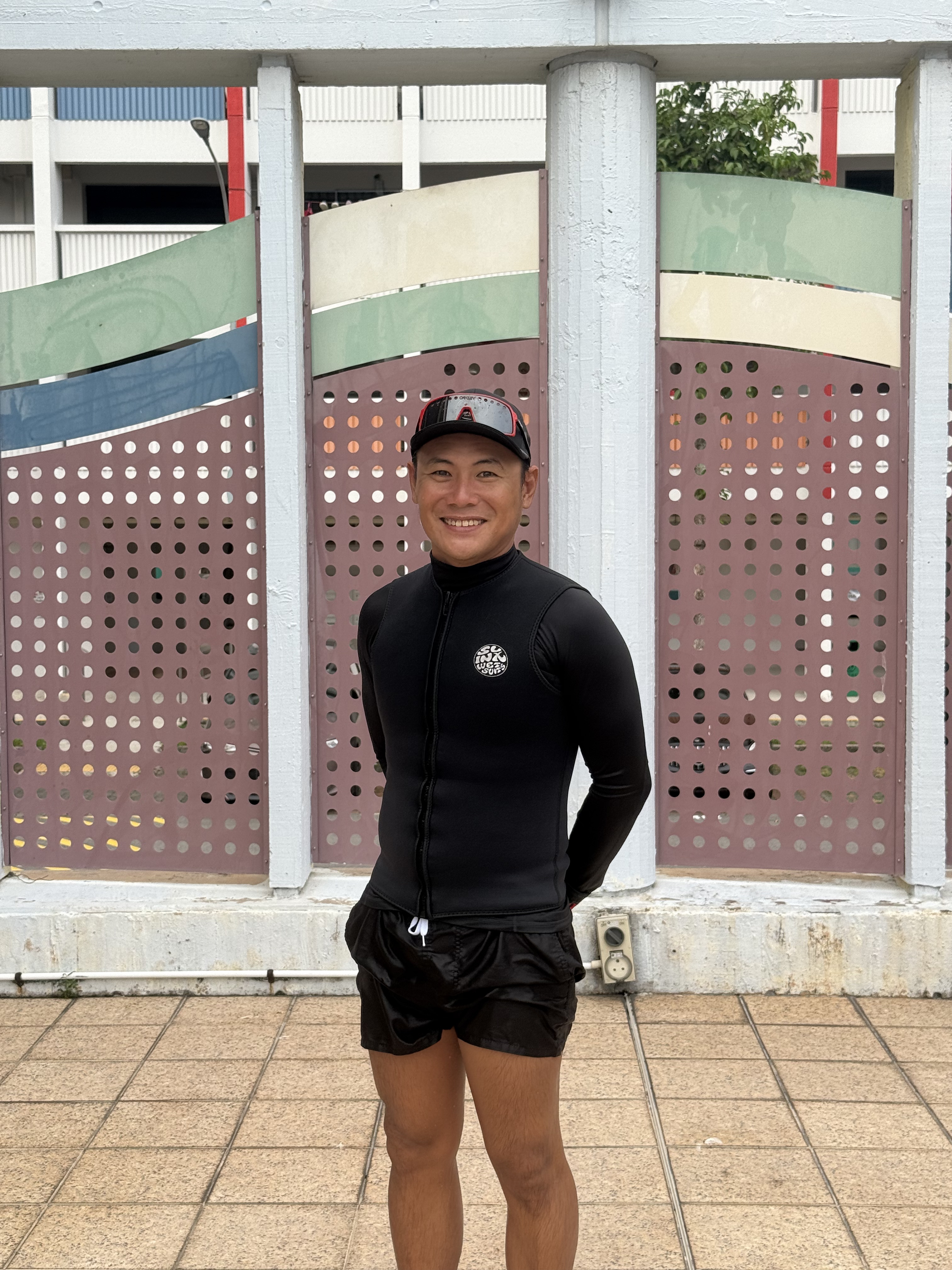
Coach Neo Kah Heng advises parents to focus on repeatable competence rather than rushing toward an assessment date. Gold is intended to demonstrate broad swimming and survival capability, not only the ability to complete a checklist once.
Common Reasons Children Struggle at Gold
One common issue is uneven development. A swimmer may have a fast front crawl but an inefficient breaststroke, weak backstroke endurance or limited experience with survival skills. Because Gold covers several strokes and situations, one major weakness can affect the overall outcome.
Another issue is training only in goggles. The Gold survival sequence is performed without goggles. A child who is uncomfortable opening the eyes, diving or orientating underwater without them needs gradual supervised exposure before assessment.
Poor pacing is also common. Starting too quickly can leave the swimmer exhausted before later components. The child should know the difference between the quick 45-metre segment and the controlled survival swimming that follows.
Finally, some children know each skill but have not rehearsed the sequence. Assessment readiness requires both physical ability and procedural familiarity.
What Should Your Child Bring and Expect?
Parents should confirm the latest instructions with the assessment organiser. Required items normally include proper swimwear and the clothing needed for the survival component. The organiser may provide or specify other equipment used during the assessment.
Private CAMS registrations generally close before the assessment date, and the current official guidance requires registration and payment three weeks in advance. Results are normally made available through the relevant platform after assessment processing, while the certificate depends on completion of both the practical and theory requirements.
Arrive early enough for the child to change, settle down and listen to instructions. Avoid introducing new technique cues immediately before the test. Assessment day should be a demonstration of established skills rather than a final training session.
Frequently Asked Questions
Is SwimSafer Gold the Same as Stage 6?
Yes. SwimSafer Gold is Stage 6, the final stage of the six-level SwimSafer 2.0 programme.
Must a Child Pass Silver Before Taking Gold?
Progression is normally based on competency. An accredited instructor should assess the swimmer’s current ability and advise the appropriate stage. Parents should not register a child for Gold solely because of age or general swimming experience.
Is the Gold Assessment Only a 400m Swim?
No. The swimming distances total 400 metres across front crawl, breaststroke, backstroke, survival backstroke and sidestroke, with an additional 15 metres of butterfly. Gold also includes deep-water and clothing-based survival skills plus the theory requirement.
Are Goggles Allowed?
The survival sequence is performed without goggles. Assessment instructions should be confirmed with the organiser for the separate swimming components.
How Long Does It Take to Prepare for SwimSafer Gold?
There is no fixed duration that applies to every child. Preparation depends on stroke efficiency, endurance, deep-water confidence, survival-skill familiarity and training frequency. Readiness should be based on consistent performance rather than a target number of weeks.
What Happens If My Child Misses a Time Limit?
The timed stroke requirement has not been met for that component. The coach should identify whether the cause was technique, pacing, endurance or assessment anxiety before planning another attempt.
Where Can My Child Train for SwimSafer Gold in North Singapore?
Families can consider classes serving Yishun and Bukit Canberra, subject to current schedules and the child’s assessed level. Review the programme pages or contact the school through the frequently asked questions page for the appropriate class route.
Prepare for Competence, Not Just the Certificate
The SwimSafer Gold requirements are demanding because they represent the programme’s highest level. A successful swimmer must demonstrate timed stroke efficiency, deep-water control, survival ability in clothing, use of flotation aids and water-safety knowledge.
The best preparation is systematic: correct technique, build repeatable pacing, practise without goggles, rehearse the complete survival sequence and complete the correct theory process. When these skills are stable, the Gold assessment becomes a confirmation of real capability rather than a one-day gamble.
Ready to Start Swimming?
Book your first lesson with our certified coaches today. Suitable for all ages and skill levels.
Join Our Class NowTypically replies within minutes · No commitment required