Swimming Lessons in North Singapore: How Parents Can Choose the Right Location
Parents searching for swimming lessons in North Singapore often start with location. That makes sense. A lesson that is convenient enough to attend every week is usually more useful than a programme that looks ideal on paper but requires a difficult trip across Singapore.
For families around Yishun, Canberra, Sembawang and nearby neighbourhoods, the decision is not simply about finding the nearest pool. The better question is whether the location, programme and learning environment make consistent progress realistic for your child.
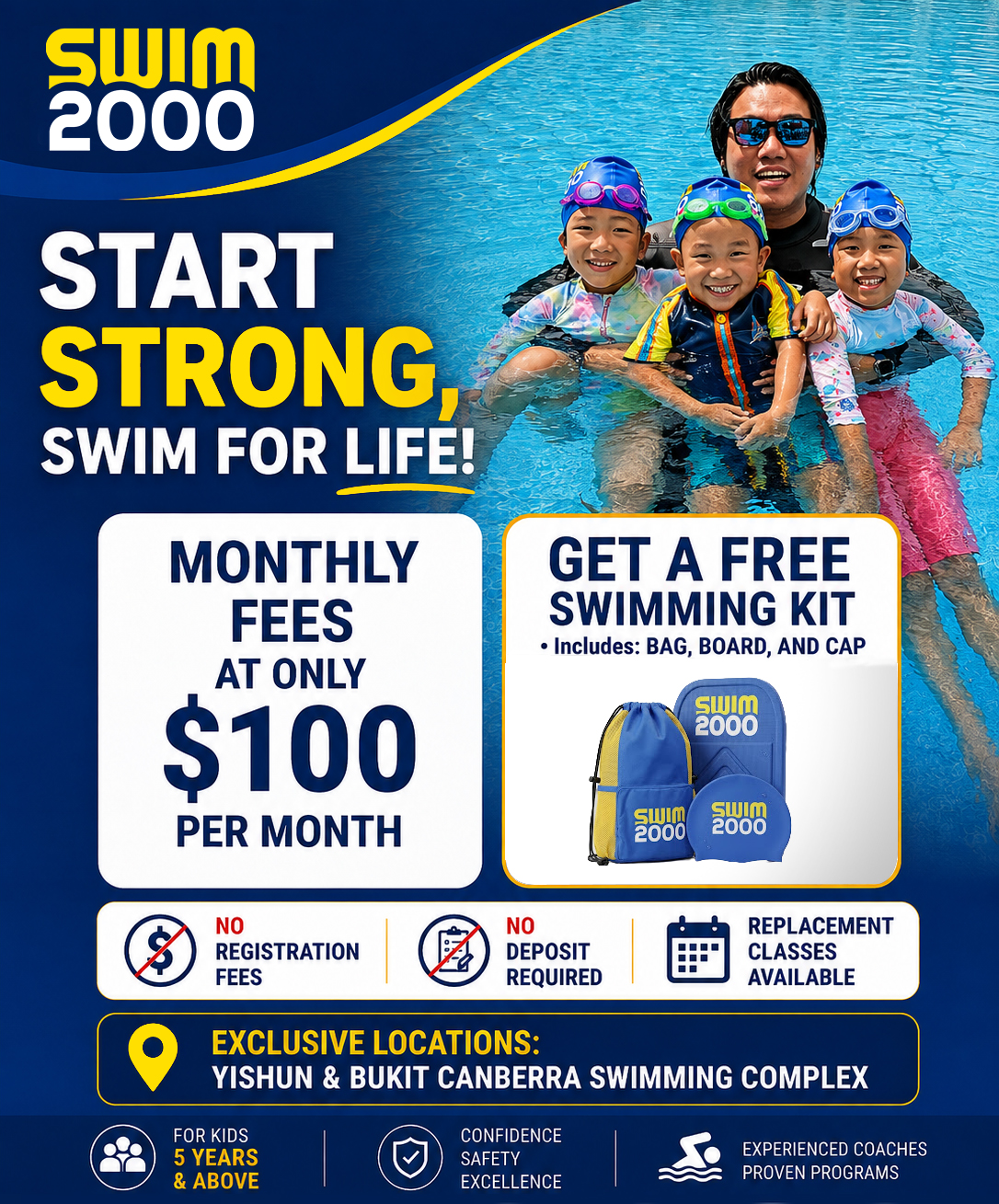
SWIM2000 provides swimming programmes in the north, including options connected with Yishun and Bukit Canberra. This guide explains the practical factors parents can use when deciding where their child should learn.
Start With Consistency, Not Distance Alone
A nearby swimming lesson has one major advantage: it is easier to keep attending.
Swimming is a motor skill. Children improve through repeated practice, correction and reinforcement. Missing lessons frequently can interrupt that process, especially for beginners who are still becoming comfortable with breathing, floating and basic stroke movements.
That means travel time matters, but the shortest journey is not automatically the best choice. Parents should consider the entire weekly routine. A pool may be geographically close but inconvenient because of school dismissal time, work arrangements, transport connections or another child’s activities.
Ask a practical question: can the family sustain this trip week after week?
A slightly longer journey that fits the family’s routine can be more workable than a closer location that repeatedly causes late arrivals or missed sessions.
Compare the Programme, Not Just the Pool
Two lessons held at different swimming complexes should not be compared only by facilities. The programme itself matters more to a child’s development.
For beginners, parents should look for a clear progression from water confidence into independent swimming skills. Children should not simply be asked to complete lengths before they can control breathing, body position and basic propulsion.
As swimmers improve, the focus should shift toward repeatable stroke technique, increasing independence and the skills appropriate to their current stage.
Families looking specifically for children’s programmes can review SWIM2000’s kids swimming lessons in Singapore to understand the broader learning pathway before deciding which northern location is more practical.
The location should support the programme. It should not replace the need to evaluate what the child is actually being taught.
Swimming Lessons in Yishun: Who Is the Location Practical For?
Yishun can be a natural choice for families who already live, study or work around the area. A familiar neighbourhood also reduces the number of new variables for a young beginner.
For parents comparing swimming lessons in Yishun, consider how the lesson fits with school, transport and the child’s energy level. A technically good session is less useful when a child regularly arrives exhausted or rushed.
Location familiarity can also help nervous beginners. Some children already associate a familiar pool with family swimming and recreation. That can make the transition into structured lessons easier, although each child’s response is different.
Parents should still judge progress by swimming ability rather than familiarity with the venue. Comfort with a pool is useful, but the objective is increasing independence and technique in the water.
Swimming Lessons at Bukit Canberra: What Should Parents Consider?
For families around Canberra and Sembawang, swimming lessons at Bukit Canberra may fit more naturally into the weekly routine.
The same decision framework applies. Consider travel, timing, the child’s starting ability and whether the programme matches the swimmer’s current needs.
A child beginning swimming lessons may need water confidence and basic control. Another child of the same age may already swim independently and require more detailed stroke development. Age alone therefore does not tell parents whether a particular learning group is suitable.
When comparing northern locations, ask what your child needs next. If the main problem is fear of submerging, the immediate priority is different from that of a swimmer who can already complete lengths but has inefficient technique.
Choose Based on Your Child’s Current Stage
Parents sometimes search for the “best swimming lessons” as though one programme must be best for every swimmer. In practice, suitability depends heavily on the child’s current stage.
Complete or nervous beginners
A nervous beginner needs enough control to feel safe while learning. Early skills may include entering the water comfortably, submerging the face, exhaling, floating with support and recovering to a stable position.
Trying to accelerate directly into full strokes can create unnecessary difficulty when the child is still tense around basic water tasks.
Children learning basic strokes
Once water confidence is established, coordination becomes more important. The swimmer must connect body position, kick, arm action and breathing without turning every attempt into a struggle.
Parents should look for visible improvement in control, not merely longer distances.
Children progressing through SwimSafer
For children following the national pathway, lessons may increasingly involve skills relevant to SwimSafer. Parents should distinguish between learning the underlying swimming and survival skills and merely trying to rehearse an assessment.
A child who can perform required skills consistently has a stronger foundation than one who can complete them only with repeated prompting.
Swimmers with established technique problems
A swimmer who already covers distance comfortably may no longer have a beginner-learning problem. If progress is limited by an established stroke fault, more focused technical work may be appropriate.
SWIM2000’s stroke correction clinic is relevant when the main objective is identifying and correcting an existing movement pattern rather than learning basic swimming from the beginning.
How Much Should Parents Prioritise the Coach?
The coach matters because swimming technique depends on observation and correction. A child can repeat a movement many times without knowing that it is inefficient.
Parents do not need to judge coaching by how loudly instructions are given or how many drills appear in a lesson. More useful signs include whether instructions are understandable, corrections relate to what the swimmer is actually doing and exercises have a clear purpose.
Coach Neo Kah Heng is part of the SWIM2000 coaching team. Across a structured programme, the objective is for swimmers to understand and perform skills with increasing independence rather than depend permanently on constant prompting.
For parents, this means the location decision should include the learning environment. Convenience helps attendance. Coaching quality determines what happens during that attendance.
What Progress Should Parents Look For?
Progress is easier to assess when parents look beyond certificates or distance.
For a beginner, progress may mean putting the face into the water without hesitation, exhaling more calmly or floating with less physical support.
For a developing swimmer, it may mean maintaining body position for longer, breathing without disrupting the stroke or completing a skill with fewer reminders.
For a stronger swimmer, progress may become more technical. The swimmer may hold a correction during normal swimming instead of only during a drill.
These changes matter because swimming ability is built from repeatable skills. A child who can perform something once has demonstrated possibility. A child who can perform it consistently is showing learning.
Parents comparing swimming lessons in North Singapore should therefore ask whether the programme produces observable skill development over time, not whether every lesson looks difficult.
When Should You Consider Changing Location or Programme?
Changing programmes too quickly can interrupt learning, but staying with an unsuitable arrangement indefinitely is also unhelpful.
First separate logistical problems from learning problems.
If attendance is inconsistent because the journey no longer fits the family’s schedule, a more practical location may improve continuity. If the child attends consistently but has stopped progressing, speak with the coach about what is limiting development before assuming the location itself is the problem.
Parents should also distinguish a genuine plateau from normal learning. Swimming skills do not improve at the same rate every week. A child may need repeated practice to coordinate one difficult movement even while other abilities continue improving.
A programme change makes more sense when there is a clear mismatch in level, learning objective or practical sustainability.
A Simple Checklist for North Singapore Parents
Before choosing between swimming lesson options in the north, consider the following questions:
- Can we attend this location consistently without regularly rushing or missing lessons?
- Does the programme match my child’s actual swimming ability rather than age alone?
- Is my child learning water control and technique, not only covering distance?
- Can the coach explain what my child is currently working on?
- Is there a clear next step when my child improves?
- If my child has a specific technical problem, would focused stroke correction be more suitable?
The answers give parents a better basis for comparison than distance alone.
Frequently Asked Questions
Where can my child take swimming lessons in North Singapore?
Families in the north can consider SWIM2000 programmes associated with Yishun and Bukit Canberra. The more suitable option depends on the family’s location, weekly routine and the child’s current swimming stage.
Is Yishun or Bukit Canberra better for swimming lessons?
Neither location is automatically better for every child. Compare practical attendance, the programme available for the swimmer’s level and whether the learning environment fits the child’s needs.
Should I choose the swimming lesson closest to home?
Proximity is useful because it can improve consistency, but it should not be the only factor. A slightly farther programme may be more suitable if its timing, learning level and weekly routine work better for the family.
How do I know whether my child is progressing?
Look for skills becoming more controlled and repeatable. Depending on the child’s level, this could mean improved water confidence, better breathing, more stable body position, cleaner stroke coordination or less dependence on reminders.
Should my child change classes if progress slows down?
Not automatically. Some skills require substantial repetition. Ask the coach what is limiting progress and what the child is currently practising. Consider a change when there is a clear mismatch in level, objective or practical attendance.
When is stroke correction more suitable than regular lessons?
Focused correction becomes more relevant when a swimmer is already independent but an established technical fault limits efficiency or progression. Regular beginner lessons remain more appropriate when foundational water control and basic stroke skills are still developing.
The Best Location Is the One That Supports Long-Term Learning
For parents choosing swimming lessons in North Singapore, convenience and coaching should be considered together. Yishun may fit one family’s routine while Bukit Canberra works better for another. The important question is whether the chosen arrangement can be sustained and whether the child is developing the skills appropriate to their current stage.
Choose a location you can attend consistently. Then judge the programme by what the swimmer is learning: better control, stronger technique, greater independence and a clear path to the next skill.
That combination gives a child a more useful foundation than choosing a swimming lesson based on distance alone.
Ready to Start Swimming?
Book your first lesson with our certified coaches today. Suitable for all ages and skill levels.
Join Our Class NowTypically replies within minutes · No commitment required