Adult Swimming Lessons in Yishun: What Beginners Should Expect
Learning to swim as an adult is different from learning as a child. Adults usually arrive with clearer goals, stronger awareness of risk and, sometimes, years of habits or anxiety around water. A useful adult swimming programme therefore does more than teach a sequence of strokes. It builds confidence, breathing control and efficient movement at a pace that allows the swimmer to understand what they are doing.
For adults looking for swimming lessons in Yishun, the practical question is often not whether it is possible to learn, but what lessons will actually involve. A complete beginner may start with water orientation and breathing before attempting a recognisable stroke. Someone who can already cross a pool may instead need technique correction, stamina or confidence in deeper water.
This guide explains what adult beginners can expect, how progression normally works and when a general adult class or a more focused technique programme may be appropriate.
Who Are Adult Beginner Swimming Lessons For?
Adult lessons are not limited to people who have never entered a pool. Beginners can have very different starting points.
Some adults are comfortable standing in shallow water but cannot float independently. Others can swim a short distance using an improvised breaststroke yet become tired quickly. Some learnt swimming years ago but never developed reliable breathing or confidence in deeper water. There are also adults preparing for travel, fitness activities or simply wanting a life skill they did not learn earlier.
Because these starting points differ, the first useful step is identifying what prevents independent swimming. The limiting factor may be fear, breathing, balance, propulsion, coordination or inefficient technique. Training becomes more effective when the coach addresses that specific barrier rather than assuming every adult needs exactly the same lesson sequence.
Adults in North Singapore can review SWIM2000’s adult swimming lessons in Singapore for the broader programme structure and available learning pathway.
What Happens in the First Few Lessons?
A first lesson should establish the swimmer’s comfort level and current ability. A coach may ask the learner to enter the water, submerge the face, exhale into the water, float with support or demonstrate any stroke they already know. This is not an assessment that requires preparation. It gives the coach a practical baseline.
Water confidence comes before distance
For a nervous non-swimmer, trying to cover a full pool length immediately is usually unproductive. Early work may focus on controlled entry, holding the pool edge, submerging gradually and learning how the water supports the body.
Confidence is not the same as being told to relax. It develops when the learner repeatedly completes manageable tasks and understands how to regain a stable position. An adult who knows how to stand safely after a glide, for example, has one less reason to panic while practising.
Breathing is taught as a skill
Many adult beginners instinctively hold their breath. Others lift the head sharply to inhale, causing the hips and legs to sink. Both patterns make swimming harder than necessary.
Lessons normally introduce controlled exhalation into the water and a predictable breathing rhythm. The exact breathing pattern depends on the stroke, but the principle is consistent: breathing should become part of the movement rather than an emergency interruption to it.
Floating and body position reduce effort
A swimmer who fights to keep the entire body high may waste energy before meaningful propulsion begins. Floating exercises help learners understand balance, buoyancy and alignment.
Body position matters later as well. In freestyle, excessive head lift can increase drag. In breaststroke, poor timing between the pull, breath, kick and glide can turn every cycle into unnecessary effort. Early attention to alignment makes later stroke learning easier.
Which Stroke Do Adult Beginners Learn First?
There is no single stroke that every adult must learn first. The appropriate sequence depends on the learner’s comfort, coordination and goals.
Breaststroke is familiar to many Singapore adults because they may already have some exposure to it. It allows forward visibility at certain points in the cycle, which can feel reassuring. However, an inefficient breaststroke kick or permanently raised head can be difficult to correct if practised for years.
Freestyle can provide efficient forward movement once breathing and body position are coordinated. For a new swimmer, however, turning the head to breathe while maintaining alignment can initially feel complex.
A coach may therefore teach foundational skills before committing to long-distance stroke practice. The objective is not to declare one stroke universally easiest. It is to develop a stroke the learner can perform safely, repeatedly and with decreasing effort.
How Adult Swimming Progression Usually Works
Progress is rarely linear. A learner may improve quickly in floating, then spend several lessons coordinating breathing with propulsion. Another adult may understand the movements immediately but need more repetition before feeling comfortable away from the wall.
A practical progression often moves through four broad abilities.
Independent water control
The learner can enter the water, submerge, exhale, recover to a stable position and move without depending constantly on the wall or coach. These skills create the foundation for independent practice.
Short controlled swims
The swimmer begins combining body position, breathing and propulsion over short distances. Short repeats allow technique to remain the priority. Repeatedly swimming to exhaustion can reinforce poor movement if the swimmer is not yet able to maintain form.
Consistent stroke technique
Distance gradually increases as coordination becomes more reliable. At this stage, the swimmer should be able to identify basic errors and respond to coaching cues. A learner might work on keeping freestyle breathing compact, improving breaststroke kick direction or maintaining a more streamlined position.
Endurance and practical confidence
Once the stroke is sustainable, sessions can include longer continuous swims and varied tasks. The goal depends on the individual. One adult may want comfortable recreational swimming; another may want fitness training or enough proficiency to participate confidently in water-based activities.
How Long Does It Take an Adult to Learn Swimming?
There is no fixed number of lessons that applies to every adult. Previous water exposure, fear level, coordination, lesson frequency and practice between sessions all affect progress.
The better measure is functional ability. Instead of asking whether ten lessons are enough, track whether the swimmer can perform specific tasks independently: controlled breathing, floating and recovery, a repeatable stroke, safe stopping and gradually increasing distance.
Consistency matters because swimming is a motor skill. Long gaps between lessons can require time to regain familiarity. Regular sessions give the learner more opportunities to reinforce the same movement patterns while corrections are still fresh.
Adults who already swim but remain inefficient have a different problem from true beginners. They may progress faster by targeting a technical limitation rather than repeating beginner instruction. SWIM2000’s stroke correction clinic is the more relevant pathway when the main objective is correcting an established stroke rather than learning basic water independence.
Choosing Adult Swimming Lessons in Yishun
Location matters because consistency is easier when lessons fit a normal weekly routine. For adults living or working in the north, swimming lessons in Yishun can reduce travel compared with crossing Singapore for each session.
Convenience alone is not enough. Before choosing a programme, clarify how beginners are grouped and how instruction adapts to different ability levels. An adult who cannot submerge comfortably needs different coaching from someone who can already swim 50 metres but wants better breathing.
Ask what happens when a learner progresses faster or slower than the rest of the group. Also clarify whether the programme is designed primarily for water confidence, stroke learning, fitness or technique correction. These goals overlap, but they are not identical.
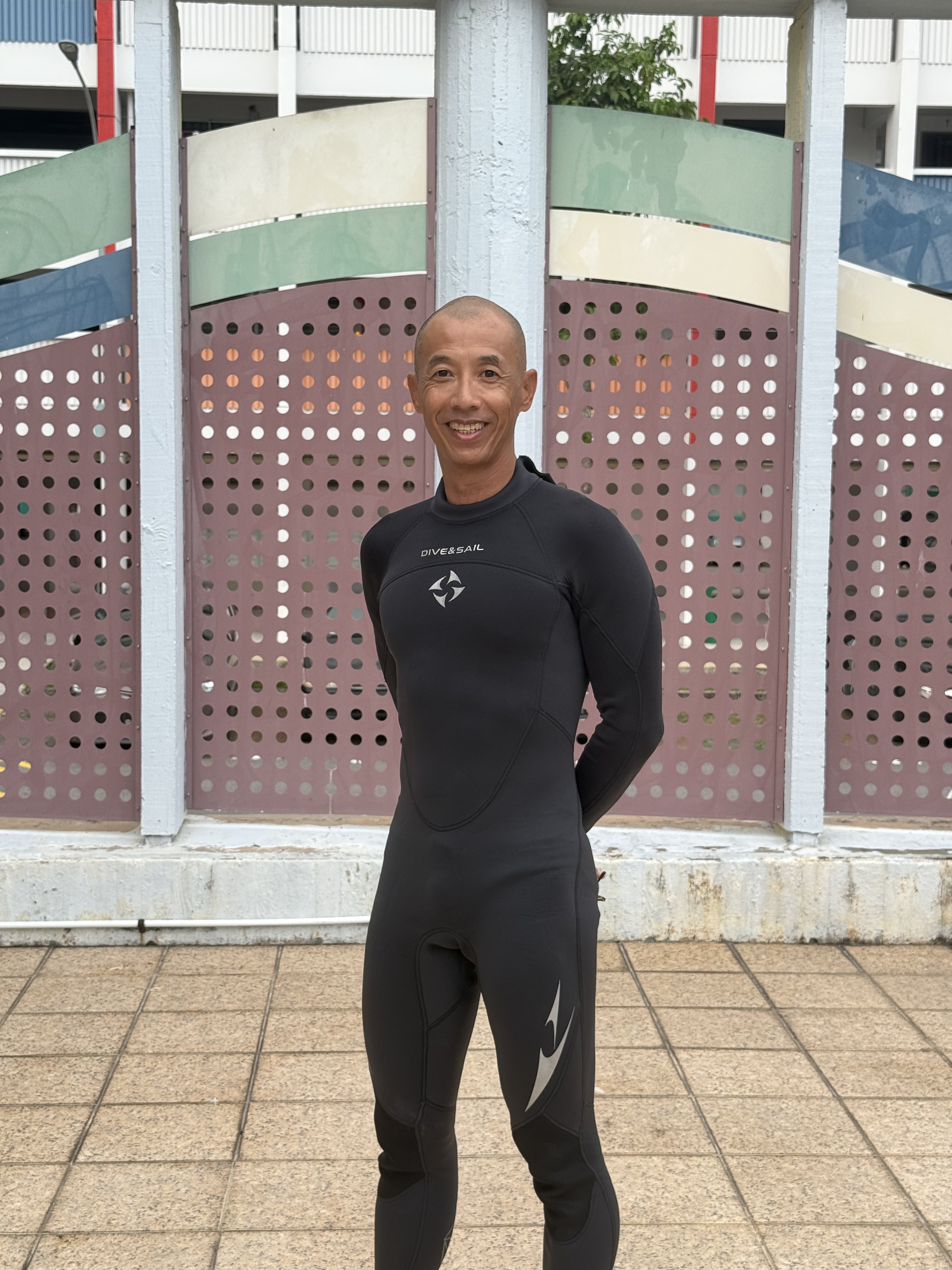
Coach David Lim is part of the SWIM2000 coaching team. When a coach understands the learner’s starting point and objective, lesson time can be directed toward the skills that actually limit progress.
Common Problems Adult Beginners Face
Feeling embarrassed about starting late
Adult learners sometimes compare themselves with children or experienced swimmers in nearby lanes. That comparison does not identify what needs to be fixed. Swimming ability depends on learned movement and exposure, not simply age.
A more useful benchmark is whether today’s task is more independent than the same task several lessons earlier.
Trying to swim too far too soon
Distance can hide technical problems. A beginner who survives repeated lengths with a lifted head and tense kick may become fitter at performing an inefficient stroke without becoming a better swimmer.
Shorter, controlled repetitions give the coach more opportunities to correct technique before fatigue changes the movement.
Holding the breath
Breath-holding creates urgency. The swimmer reaches the point where inhalation feels desperate, then disrupts body position to get air. Learning continuous or appropriately timed exhalation makes the breathing cycle more predictable.
Excessive tension
Rigid shoulders, clenched hands and frantic kicking increase energy use. Tension is often linked to uncertainty, so technical instruction and confidence work should happen together. Telling a nervous swimmer merely to relax does not provide a movement solution.
Practising errors repeatedly
Independent practice is useful when the swimmer knows what to rehearse. Repeating an incorrect kick or breathing action hundreds of times can make that habit more established. Beginners benefit from leaving each coached session with one or two clear practice objectives.
What Should You Bring to an Adult Swimming Lesson?
Use swimwear that allows comfortable movement and complies with the pool’s requirements. Goggles can make repeated submersion more comfortable and allow the learner to see underwater. A towel and drinking water are basic practical items.
More important than equipment is arriving with a clear objective. Tell the coach about previous lessons, discomfort in deep water, injuries that affect movement and what you want to achieve. Relevant information helps the coach select appropriate exercises.
Do not buy specialised training equipment simply because advanced swimmers use it. Kickboards, fins or other aids can be useful when a coach assigns them for a specific purpose, but equipment does not replace the underlying skill.
Frequently Asked Questions
Am I too old to start swimming lessons?
No fixed adult age prevents someone from learning the skill. The appropriate pace and exercises depend on the individual’s mobility, comfort and starting ability rather than whether they learnt as a child.
Can I learn if I am afraid of deep water?
Training can begin with controlled skills in an environment where the learner feels manageable. The progression should establish breathing, recovery and independent movement before increasing the challenge. Tell the coach about the fear at the start rather than hiding it.
Should I choose group or individual lessons?
The better format depends on the learner. Group lessons can provide regular structured practice, while more individual attention may be useful for strong anxiety or a specific technical problem. The key question is whether the format gives enough feedback for your current barrier.
Do I need to be fit before learning to swim?
No. Technique and water control come before swimming fitness for a beginner. Fitness can improve as distance and training volume increase, but poor technique should not be compensated for simply by working harder.
What if I can swim but cannot breathe properly in freestyle?
That is usually a technique-correction need rather than a complete beginner problem. A coach can examine head position, exhalation, rotation and timing. A focused stroke-correction programme may be more suitable than restarting from basic water confidence.
Are Yishun lessons only for complete beginners?
No. Adults can have different starting abilities and objectives. The relevant programme should match whether you need foundational swimming skills, greater confidence, improved endurance or technical correction.
Start With the Skill That Limits You Most
Adult swimming progress becomes clearer when training is based on the swimmer’s actual limitation. A complete beginner may need water confidence and breathing. A self-taught swimmer may need a more efficient stroke. Someone returning after years away may need to rebuild consistency before increasing distance.
For adults in Yishun and North Singapore, choosing a nearby programme can make regular attendance easier. The important part is what happens once you are in the pool: establish a realistic baseline, work on one limiting skill at a time and increase difficulty only when the previous skill is controlled.
That approach turns learning to swim from an undefined goal into a sequence of measurable abilities—and gives adult beginners a practical way to see progress from lesson to lesson.
Ready to Start Swimming?
Book your first lesson with our certified coaches today. Suitable for all ages and skill levels.
Join Our Class NowTypically replies within minutes · No commitment required