How Many Swimming Lessons Does a Child Need?
Parents often want a simple number: how many swimming lessons does a child need before they can swim?
There is no fixed lesson count that applies to every child. A beginner may become comfortable moving through the water within a relatively short period, while reliable independent swimming, sound technique and competence across several strokes take longer. Progress depends on the child’s starting ability, age, confidence, lesson frequency, practice, coordination and the standard being used to define “can swim”.
A better way to judge progress is to look at skills rather than count lessons. A child who can enter the water confidently, control breathing, float, recover to a safe position and travel independently is at a different stage from a child who can swim one length but struggles with breathing or technique.
Why There Is No Standard Number of Swimming Lessons
Swimming is a collection of skills, not one skill learned at a single moment.
A beginner first needs to become comfortable in the water. The child then learns breath control, buoyancy, body position, kicking, propulsion and coordination. Later, these elements are combined into recognisable strokes and refined so that swimming becomes more efficient.
Two children attending the same number of lessons can therefore have very different outcomes.
One child may arrive already comfortable putting their face in the water and floating. Another may spend the first few lessons learning to enter the pool without fear. Both can be making appropriate progress even if they are working on different skills.
This is why parents comparing lesson counts between children can get a misleading picture.
What Does “Learning to Swim” Mean?
Before estimating how long lessons should take, decide what outcome matters.
Water confidence
For a nervous beginner, the first objective may simply be comfort and control in the water. That includes putting the face in, blowing bubbles, floating with support and responding calmly when water reaches the face.
These are foundational skills. Rushing past them can create problems later because efficient swimming depends on being relaxed enough to maintain body position and breathing control.
Basic independent swimming
The next milestone is usually independent movement through the water over a useful distance. The child should not depend on a coach holding or pushing them.
Distance alone, however, is not a complete measure. A child who can force their way through 10 or 20 metres while repeatedly losing balance is not at the same stage as one who moves with controlled breathing and body position.
Competent stroke technique
Learning freestyle, breaststroke, backstroke or butterfly requires coordination. Arms, legs, breathing and body movement have to work together.
Technique can continue improving long after a child is technically able to complete a length. This is where stroke correction becomes relevant for swimmers whose basic strokes are established but contain faults that limit efficiency or further progress.
Broader swimming proficiency
Some families want a child to progress through structured water-safety or swimming programmes rather than merely learn one stroke.
In Singapore, parents may also be interested in the SwimSafer programme, where progression involves a wider set of swimming and water-safety competencies. The number of lessons needed then depends on the child’s current stage and whether all required skills are consistently demonstrated.
Factors That Affect How Many Lessons a Child Needs
Starting water confidence
A child who enjoys being underwater usually has fewer initial barriers than a child who is frightened of splashing, submerging or losing contact with the pool floor.
Fear should not be treated as wasted lesson time. Learning to remain calm in water is itself part of learning to swim.
Lesson frequency
Consistency matters.
A child attending regularly has more opportunities to reinforce movement patterns before they are forgotten. Long gaps can mean spending part of the next lesson rebuilding familiarity.
This does not mean more lessons are automatically better. Quality, recovery, motivation and the child’s ability to absorb instruction still matter. The useful question is whether the schedule is regular enough for skills to build on one another.
Age and developmental readiness
Age can affect attention, coordination, strength and the ability to understand instructions. It does not create a universal timetable.
A younger child may need more repetition for a complex movement. An older beginner may understand a technical explanation faster but still need time to develop water confidence and physical coordination.
Parents should therefore compare the child with their own previous ability, not simply with swimmers of the same age.
Practice outside lessons
Appropriate practice can reinforce what a coach has taught. Even simple familiarity with floating, kicking or controlled breathing may help a child become more comfortable.
Practice should reinforce correct skills rather than turn into unsupervised technical experimentation. Repeating an incorrect movement hundreds of times can make it harder to change later.
The skill being learned
Not all swimming skills have the same complexity.
Basic kicking and floating may be learned relatively quickly. Coordinating freestyle breathing requires timing between rotation, inhalation, exhalation and arm movement. Breaststroke requires a particular relationship between the pull, breath, kick and glide. Butterfly introduces another level of timing and body coordination.
A lesson count that seems reasonable for basic water confidence cannot be applied directly to four-stroke proficiency.
How Parents Should Measure Progress Instead
Rather than asking whether a child has completed enough lessons, look for observable changes.
The child needs less physical assistance
A beginner may initially need support to float, kick or move away from the wall. Progress means that assistance gradually reduces.
Skills become repeatable
Doing something once is different from owning the skill.
If a child can float successfully only once in several attempts, the skill is still developing. When the same movement can be repeated calmly across lessons, it is becoming established.
Distance increases without technique collapsing
More distance is useful only when the child retains reasonable control.
If a swimmer can go farther only by lifting the head excessively, rushing the stroke or stopping normal breathing, distance may be hiding a technical problem.
The coach introduces more complex tasks
Progression in lesson content is another useful signal. When foundational skills become reliable, the coach can build on them rather than repeatedly returning to the same basic correction.
Parents considering structured kids swimming lessons in Singapore should ask what skill progression the coach is working toward, rather than focusing only on how many sessions have been completed.
When Should Parents Be Concerned About Slow Progress?
A temporary plateau is normal. Swimming development is rarely linear.
Children can improve rapidly in one area and then spend weeks consolidating another. Growth, confidence, attention and changes in technique can all affect what progress looks like.
A more useful concern is persistent lack of change despite regular attendance.
If the same problem continues for a long period, ask:
- What specific skill is limiting the child now?
- What correction is being taught?
- Can the child perform the skill in isolation?
- Does the problem appear only when the full stroke is attempted?
- Has the coach changed the drill or explanation when the first approach did not work?
These questions identify the bottleneck instead of assuming the solution is simply more lessons.
Should a Child Stop Lessons Once They Can Swim a Length?
That depends on the family’s objective.
Swimming one length independently is an important milestone, but it does not necessarily mean the child has developed broad water competence or efficient technique.
A swimmer may complete a length while still having weak breathing control, poor body position or only one usable stroke. If lessons stop immediately, those limitations may remain.
Parents should decide whether the target is basic independent swimming, stronger water-safety competence, multiple strokes, SwimSafer progression, fitness or eventual competitive development.
The endpoint changes the amount and type of instruction required.
Choosing Lessons Based on Progress, Not a Package Number
When evaluating a swimming programme, avoid assuming that a package containing a certain number of sessions guarantees a particular outcome.
A more useful structure has three parts:
- a clear starting assessment;
- identifiable skills being developed;
- regular evidence of progression.
For families in the north, SWIM2000 provides information about swimming lessons in Yishun and swimming lessons at Bukit Canberra. Regardless of location, the same principle applies: judge lessons by what the child is learning and retaining.
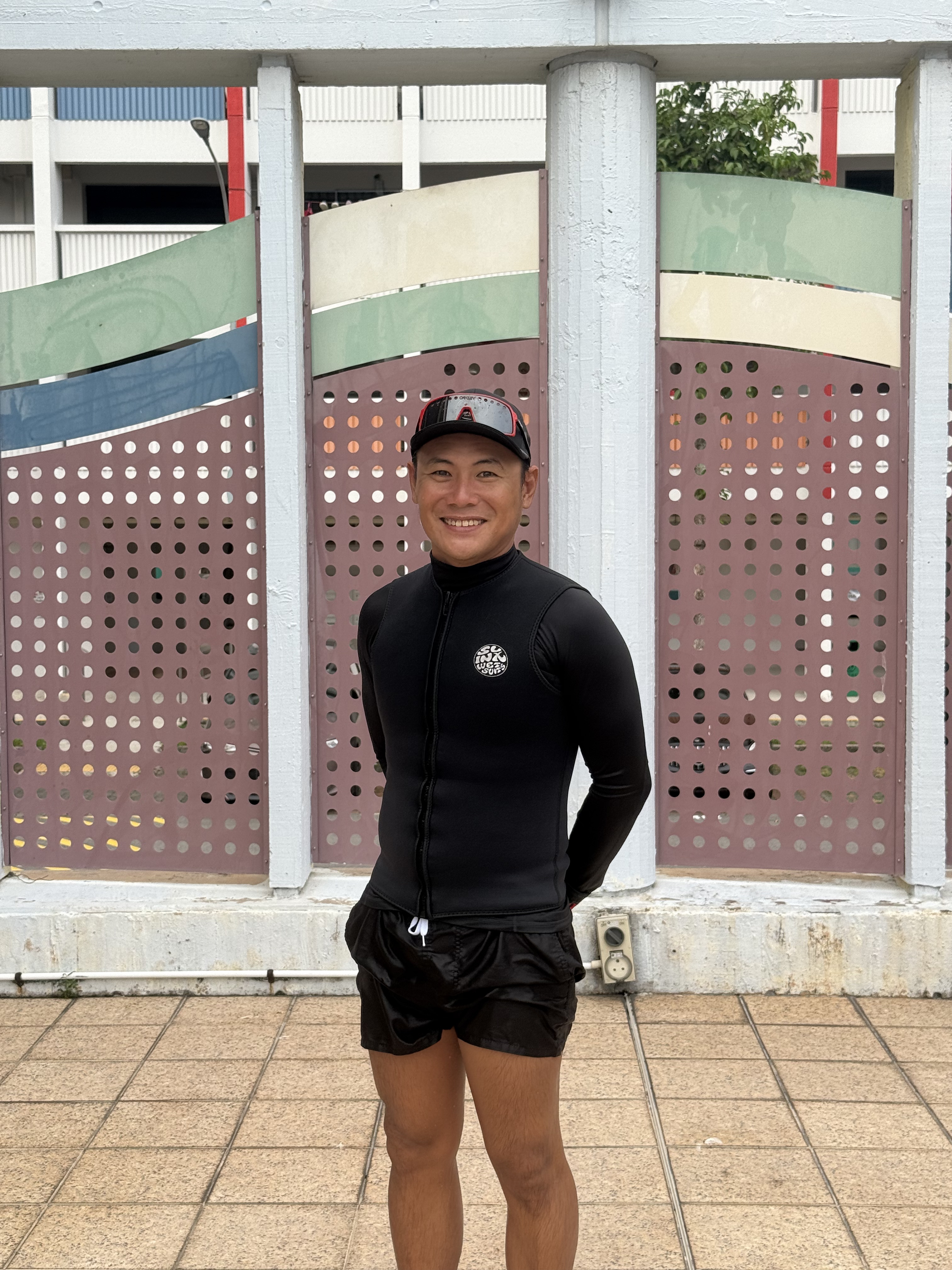
Coach Neo Kah Heng and the coaching team can assess swimming ability directly because the number of completed lessons alone does not show what a swimmer can actually do.
Frequently Asked Questions
How many swimming lessons does a beginner child usually need?
There is no reliable universal number. The time required depends on the child’s water confidence, coordination, age, lesson frequency, practice and the level of swimming competence expected. Measure progress by skills achieved rather than sessions completed.
How often should children attend swimming lessons?
Regular attendance generally helps skills build consistently because there are fewer long gaps between practice. The appropriate frequency depends on the child and programme. Consistency is more useful than trying to compensate for irregular attendance with occasional intensive sessions.
Why is my child still not swimming independently after several lessons?
The child may still be developing a prerequisite such as water confidence, breath control, balance or propulsion. Ask the coach which specific skill is preventing independent swimming and what change would demonstrate progress.
Is swimming one length enough to say a child can swim?
It demonstrates some independent swimming ability, but it does not by itself establish broad proficiency. Look at breathing control, body position, ability to recover safely, repeatability and whether the child can use more than one swimming skill or stroke.
Do children learn faster in private swimming lessons?
Individual attention can allow instruction to focus closely on one swimmer, but lesson format alone does not guarantee faster progress. Confidence, teaching quality, consistency, practice and the child’s response to instruction also affect learning.
When should my child consider stroke correction?
Stroke correction becomes useful when a swimmer can already perform the basic stroke but persistent technical faults reduce efficiency or prevent further improvement. It is different from teaching a complete beginner the fundamentals.
Focus on What the Child Can Do
The number of swimming lessons completed is easy to count, but it is not the best measure of learning.
Track whether the child is calmer in water, needs less assistance, controls breathing better, travels farther with sound technique and can repeat skills consistently. Those changes show whether lessons are working.
For parents, the practical question is not “Has my child taken enough lessons?” It is “What can my child do now that they could not do before, and what skill comes next?”
Ready to Start Swimming?
Book your first lesson with our certified coaches today. Suitable for all ages and skill levels.
Join Our Class NowTypically replies within minutes · No commitment required