How Long Does It Take to Learn Swimming? A Practical Guide for Adults in Singapore
Adults often ask how many lessons they need before they can swim. The useful answer is not a fixed number: learning time depends on your starting water confidence, lesson frequency, coordination, fitness and what you mean by “can swim.”
For one adult, success may mean crossing a pool safely without stopping. Another may want comfortable freestyle breathing, multiple strokes or enough endurance to swim continuously for exercise. Those are different goals and require different amounts of practice.
As a practical guide, an adult beginner who trains consistently can often make noticeable progress within several lessons, but becoming a relaxed, independent swimmer usually takes longer. Instead of judging progress only by weeks or lesson count, use specific skills as milestones.
What Does “Learning to Swim” Actually Mean?
Before estimating a timeline, define the outcome. Swimming is a collection of skills rather than one ability.
A complete beginner first needs to become comfortable entering the water, putting the face in, exhaling underwater, floating, recovering to a standing position and moving without panic. Propulsion comes next. Efficient breathing, stroke coordination and endurance develop after those foundations become stable.
For most adult beginners, a useful definition of independent swimming is the ability to enter the pool calmly, maintain control in water where they cannot simply stand, swim a practical distance using a recognisable stroke and stop or recover safely when tired.
That standard is more meaningful than completing one length once. A swimmer who reaches 25 metres by holding their breath and rushing may still struggle badly on the next attempt. A swimmer who can breathe rhythmically, slow down and recover has a stronger foundation even if the pace is slower.
Adults considering structured instruction can review SWIM2000’s adult swimming lessons in Singapore to understand how beginner training fits into a progressive lesson pathway.
A Realistic Adult Swimming Learning Timeline
There is no universal number of lessons, but progress usually follows a recognisable sequence.
First few lessons: water control and basic movement
For a true beginner, the early objective is control rather than distance. Lessons commonly focus on breathing into the water, floating, gliding, kicking, standing recovery and basic arm actions.
An adult who is already comfortable in pools may move through this phase quickly. Someone with a strong fear response may need considerably longer. That is not wasted time. If breathing becomes uncontrolled whenever the face enters the water, adding more stroke instructions usually creates more problems rather than faster progress.
Early improvement should therefore be measured by questions such as: Can you submerge without immediately lifting your head? Can you float without becoming rigid? Can you regain your feet calmly? Can you glide while keeping a balanced body position?
Developing a usable stroke
Once basic water control is stable, lessons can combine body position, kick, arm action and breathing into a usable stroke. Freestyle often becomes difficult at this point because breathing requires timing rather than simply turning the arms and legs.
Many adults discover that they can move several metres but lose rhythm when they need air. The solution is usually not to swim harder. It is to improve exhalation, head position and timing so breathing becomes part of the stroke instead of an interruption.
Progress may appear uneven. You might swim well during one drill and struggle when the full movement is combined. That is normal skill acquisition: the nervous system is coordinating several actions that were previously separate.
Building independence and endurance
After you can complete short distances with control, the next stage is repetition. The objective is to reproduce the stroke without constant coaching cues and gradually increase distance without technique collapsing.
A beginner who can swim 25 metres once has achieved an important milestone, but independence means more than that. You should be able to repeat the distance, breathe without panic, recognise fatigue and stop safely.
Endurance usually improves faster when technique becomes more economical. Poor body position or inefficient breathing can make one pool length feel exhausting even when cardiovascular fitness is reasonable.
Five Factors That Change How Long Learning Takes
Your starting level of water confidence
Water confidence has a major effect on learning speed. Adults who are comfortable floating and submerging can focus more attention on technique. Adults who fear losing contact with the floor may divide their attention between the coach’s instructions and a strong urge to regain safety.
Fear should be addressed through controlled exposure and repeatable skills. Being forced into deeper water does not prove competence. The goal is to replace uncertainty with actions you know you can perform.
How often you practise
Consistency matters because swimming is a motor skill. One lesson followed by a long break gives the body fewer opportunities to reinforce new movement patterns.
Regular lessons generally produce more continuity than sporadic sessions. Additional safe practice can also help when it reinforces what the coach has already taught rather than introducing conflicting techniques.
The important variable is not simply total hours. Ten focused sessions with clear objectives can be more productive than many sessions spent repeatedly swimming with the same unresolved error.
Your breathing technique
Breathing is one of the most common bottlenecks for adult freestyle beginners. Holding the breath underwater, lifting the head too far or trying to inhale and exhale during the same short turn can quickly create breathlessness.
If freestyle breathing is limiting progress, targeted instruction may be more useful than simply increasing distance. SWIM2000’s stroke correction clinic is relevant for swimmers who can already move through the water but need focused work on technique rather than basic water familiarisation.
Your coordination and previous movement experience
Adults arrive with different movement backgrounds. Experience in other sports may help body awareness, but it does not automatically translate into efficient swimming. Water changes balance, resistance and breathing mechanics.
Some learners understand a technical explanation immediately but need repeated physical practice before the movement becomes automatic. Others learn better through short cues and demonstrations. Effective coaching adapts the task without changing the underlying skill objective.
Your definition of success
Learning enough to swim a short recreational distance is different from becoming technically efficient across freestyle, breaststroke, backstroke and butterfly. Likewise, swimming continuously for fitness requires more endurance than completing a basic beginner milestone.
Set the first target narrowly. For example: “I want to swim 25 metres of freestyle while breathing calmly” is easier to train and assess than “I want to be good at swimming.” Once that milestone is stable, extend the goal.
How to Learn Faster Without Rushing
The fastest useful progress usually comes from removing the biggest constraint first.
If you are uncomfortable submerging, work on water confidence before demanding full-stroke distance. If you can swim but become breathless after 15 metres, examine breathing and body position. If technique is stable but you cannot sustain distance, then progressive endurance work becomes more relevant.
During lessons, focus on one or two cues at a time. Trying to correct the hands, elbows, kick, head position and breathing simultaneously can overload attention. A coach can prioritise the error that creates the largest downstream problem.
Short repetitions are also useful. A controlled 10-metre repetition with correct breathing may teach more than repeatedly completing 50 metres with deteriorating technique. Distance should increase as control becomes repeatable.
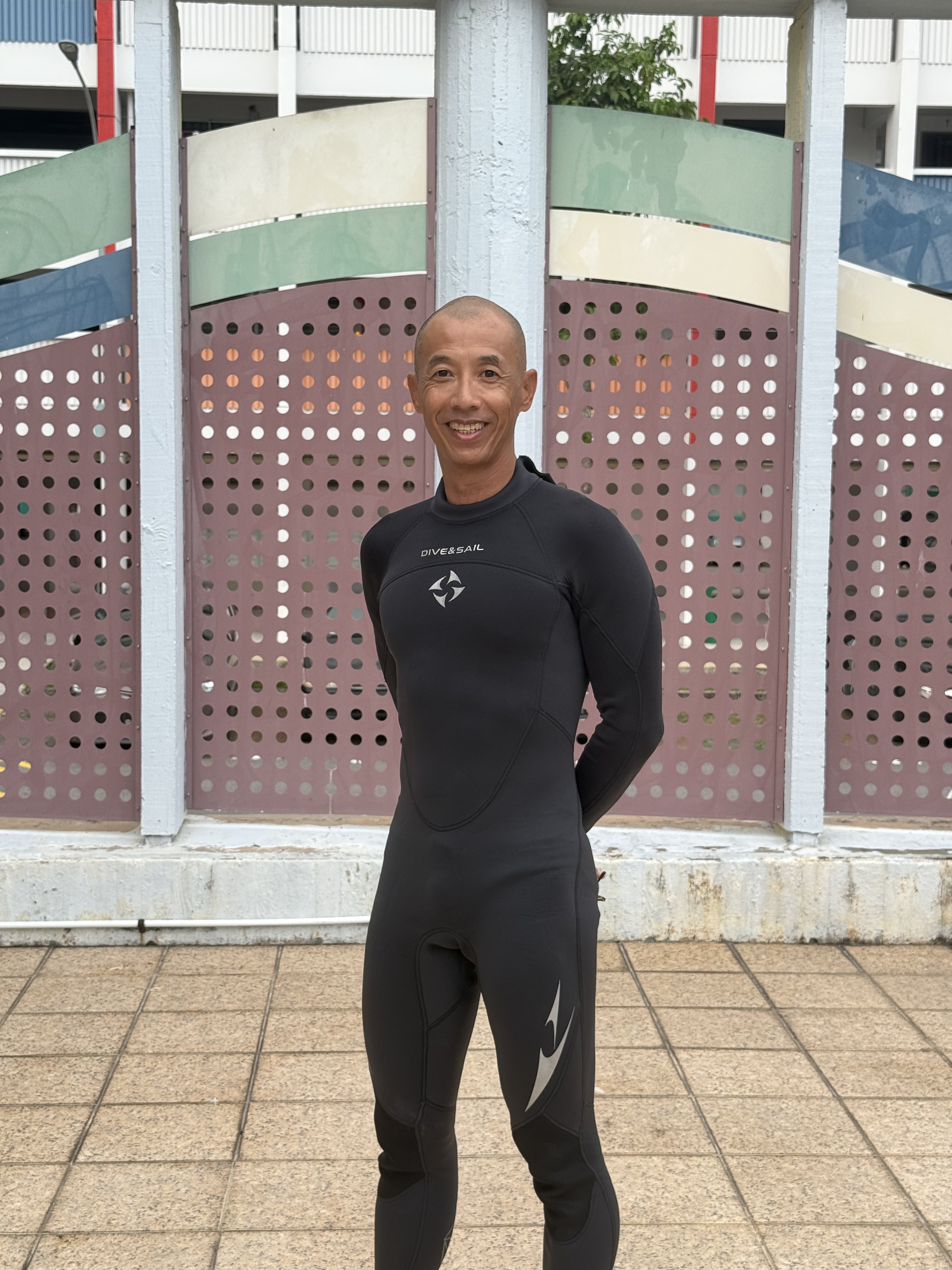
Coach David Lim and the SWIM2000 coaching team can assess whether an adult beginner needs foundational water-confidence work, stroke development or focused correction before increasing training volume.
Signs You Are Becoming an Independent Swimmer
Do not judge improvement only by speed. For an adult beginner, independence is visible through control.
Useful signs include being able to enter the water without hesitation, place the face in comfortably, exhale continuously, float and recover, swim short distances repeatedly, breathe without lifting the head excessively and stop safely when needed.
Another important sign is self-correction. If you notice that you are holding your breath or rushing your kick and can adjust without the coach stopping you, the skill is becoming more durable.
Distance still matters, but it should grow from technique rather than replace it. Moving from 25 metres to 50 metres while maintaining the same breathing rhythm is more meaningful than doubling distance by struggling through the final half.
What If You Have Taken Lessons Before but Still Cannot Swim?
Previous lessons do not necessarily mean you should restart from zero. Identify where the breakdown occurs.
Some adults can float and kick but cannot coordinate breathing. Others can swim in shallow water but become anxious when they cannot stand. Some have a workable stroke but use so much effort that they stop after one length.
These are different problems. A targeted assessment can separate confidence, technique and endurance limitations so lesson time is spent on the actual constraint.
For adults in North Singapore, location and schedule consistency also affect progress. Choosing lessons you can attend regularly is more useful than selecting an ideal programme that you frequently miss. SWIM2000 also provides swimming lessons in Yishun and swimming lessons at Bukit Canberra for learners looking at North Singapore options.
Frequently Asked Questions
Can an adult learn to swim from zero?
Yes. Adult beginners can learn water confidence, breathing, floating, propulsion and coordinated strokes progressively. The starting sequence should match the learner’s current comfort and control rather than assume prior swimming experience.
How many swimming lessons does an adult need?
There is no fixed number that applies to everyone. Lesson count depends on starting confidence, frequency, practice quality, coordination and the target skill. Measure progress against specific abilities such as floating, breathing, completing a stroke and swimming repeatable distances.
Is one swimming lesson per week enough?
Weekly lessons can produce progress when attendance is consistent and skills are reinforced. More frequent appropriate practice may accelerate motor learning, but additional sessions do not compensate for repeatedly practising poor technique.
Why can I swim 25 metres but feel exhausted?
Common causes include breath-holding, excessive kicking, poor body position and inefficient stroke mechanics. Fitness can contribute, but a beginner who is exhausted after one length should also have technique assessed before assuming the solution is simply more conditioning.
Should adults learn breaststroke or freestyle first?
There is no single sequence suitable for every learner. The coach may choose skills and strokes according to water confidence, coordination and goals. The priority is developing safe control and a repeatable movement pattern rather than forcing a particular stroke timeline.
Am I too old to learn swimming?
Age alone does not determine whether an adult can learn. The relevant factors are health, mobility, water confidence, instruction and consistent practice. Adults may learn differently from children because they bring more conscious analysis and sometimes stronger fear responses, but the core skills remain trainable.
Focus on Milestones, Not a Deadline
“How long does it take to learn swimming?” is best answered with milestones rather than a promised number of weeks. First gain control of breathing and body position. Then develop a repeatable stroke. After that, build independence and endurance while preserving technique.
A realistic learning plan identifies your current limiting skill and works on it consistently. When progress is measured by what you can do safely and repeatedly, rather than how quickly you reached a particular lesson count, the timeline becomes clearer and the swimming ability you build is more useful.
Ready to Start Swimming?
Book your first lesson with our certified coaches today. Suitable for all ages and skill levels.
Join Our Class NowTypically replies within minutes · No commitment required