Bukit Canberra SwimSafer: What Parents Should Know Before Enrolling
Families around Canberra and Sembawang often search for SwimSafer lessons close to home because swimming progress depends heavily on consistency. A programme may be technically suitable, but it is difficult for a child to build confidence, coordination and endurance when attendance is irregular.
For parents considering SwimSafer around Bukit Canberra, the main question is not simply where the lessons are held. It is whether the child is entering at an appropriate level, learning the underlying skills rather than only rehearsing an assessment, and progressing toward greater independence in the water.
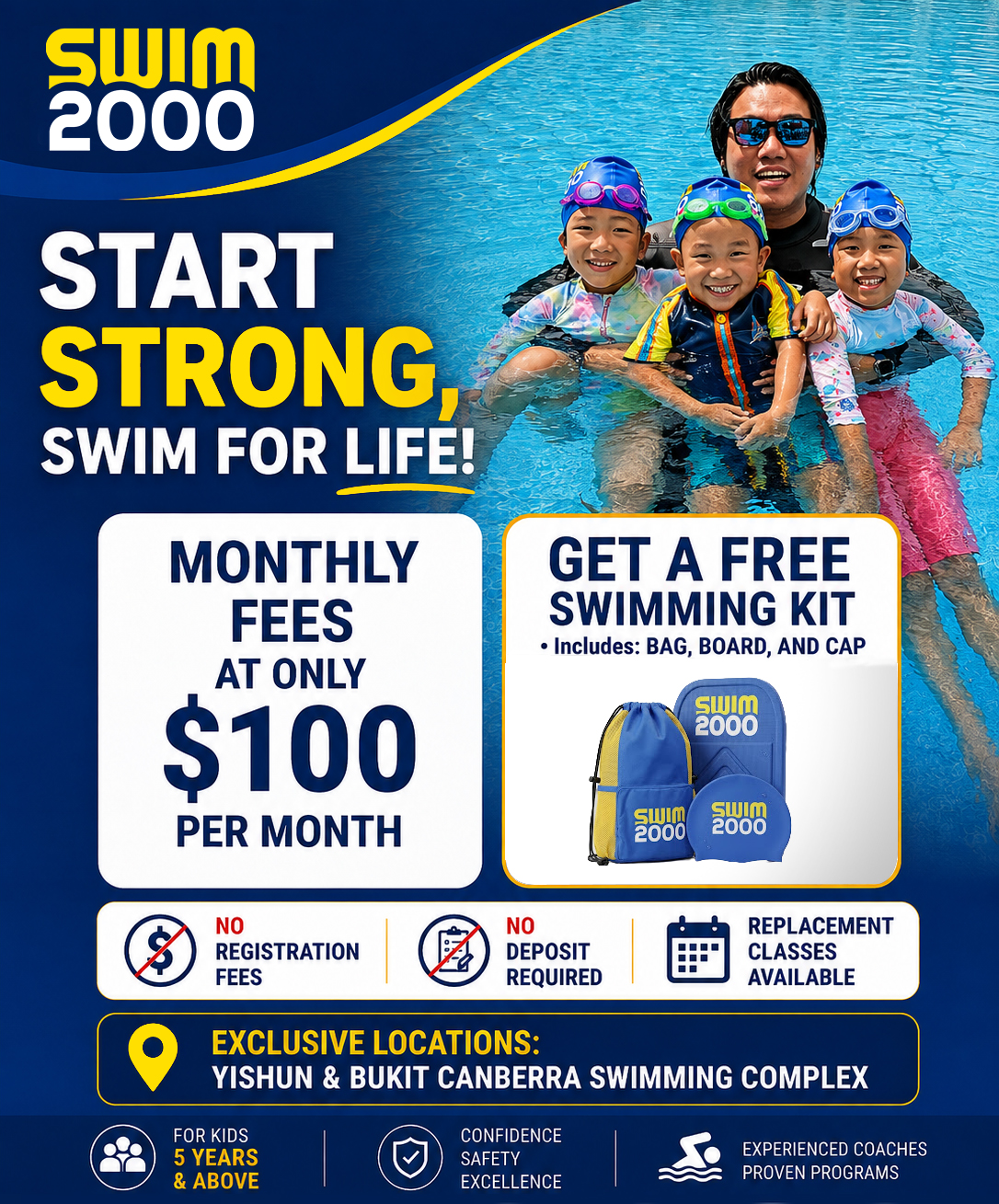
SWIM2000 provides swimming lessons at Bukit Canberra and supports children working through the SwimSafer pathway. This guide explains how parents can approach that journey, what to look for during training and how to decide when a child is ready for the next stage.
What Is SwimSafer?
SwimSafer is Singapore’s structured swimming and water-safety progression for children. It develops swimming ability together with water-survival and safety skills across progressive stages.
For parents, the useful way to view SwimSafer is as a learning pathway rather than a collection of certificates. Passing an assessment confirms that a child has demonstrated required competencies at that point. It does not mean technique development is finished.
A child still needs to make those skills repeatable. Breathing, body position, propulsion, coordination and water confidence continue developing as training becomes more demanding.
Parents who want an overview of the pathway can review SWIM2000’s SwimSafer programme in Singapore.
Why Bukit Canberra Can Be Practical for North Singapore Families
For families living around Canberra, Sembawang and nearby parts of the north, lesson location affects how sustainable the weekly routine is.
Swimming is a motor skill. Children improve through repeated practice, feedback and correction. A convenient location can make it easier to maintain that repetition over months rather than attending inconsistently.
However, convenience should not be confused with suitability. Before enrolling, parents should still consider the child’s current swimming ability and the programme’s progression.
A beginner who is uncomfortable putting the face into the water has different needs from a child who already swims independently and is preparing for a higher SwimSafer stage. Two children of the same age may therefore need different starting points.
Start With the Child’s Actual Ability
Parents sometimes focus first on which SwimSafer stage their child “should” be in. A better starting point is what the child can perform independently and consistently.
For a nervous or complete beginner
The first priority is water control. The child may need to become comfortable entering the pool, submerging, exhaling into the water, floating and recovering to a stable position.
These skills can look simple from the pool deck, but they determine whether the child can learn more complex movements without panic or excessive tension.
If your child is still developing these foundations, SWIM2000’s kids swimming lessons in Singapore provides the broader context for beginner progression.
For a child who can already swim
Being able to cross the pool does not automatically mean the swimmer is ready for a particular SwimSafer stage.
Look at how the child completes the distance. Can breathing remain controlled? Does technique collapse after a short distance? Can the child follow instructions without repeated physical assistance? Can the relevant water-safety skills be performed reliably?
Assessment readiness depends on competency, not only distance.
What Should SwimSafer Training Develop?
A useful SwimSafer programme should produce broader swimming ability, not just familiarity with an assessment sequence.
Water confidence and control
A child should become increasingly comfortable handling normal challenges in the water. That includes submersion, changes in body position and recovering from movements without immediately reaching for the wall.
Confidence is not measured by how excited a child appears before class. It is demonstrated through controlled behaviour and independent responses in the water.
Efficient propulsion
As children progress, they need to move through the water with increasing control. Simply working harder is not the same as swimming better.
Poor body position, inefficient kicking or badly timed breathing can make every length unnecessarily tiring. Coaches may therefore spend time correcting movements even when the child can already cover the required distance.
Breathing coordination
Breathing problems frequently limit developing swimmers. A child may hold the breath, lift the head excessively or lose body position whenever air is needed.
The exact correction depends on the stroke and swimmer, but the objective is consistent: breathing should become integrated into the movement rather than interrupt it.
Water-safety skills
SwimSafer is not only about conventional strokes. Water-safety and survival competencies are part of the progression.
Parents should therefore avoid judging lesson quality only by how many freestyle or breaststroke lengths a child completes. The programme has a broader purpose.
Assessment Preparation Should Not Replace Skill Development
As assessment approaches, some practice will naturally become more specific. Children need to understand what they will be asked to perform and should be familiar with the required sequence.
The risk is turning every lesson into assessment rehearsal too early.
If a child can complete a task only after repeated reminders, the underlying skill may not yet be stable. If technique deteriorates immediately under fatigue, more development may be needed before simply repeating the full test again.
A better preparation process builds the individual components first, then combines them under assessment-like conditions.
Parents can use three questions to judge readiness:
- Can my child perform the skill without physical assistance?
- Can my child repeat it consistently rather than succeed once?
- Can my child perform it while remaining calm and following instructions?
Those questions provide more information than counting how many times the assessment sequence has been practised.
How Parents Can Track Progress Between Assessments
SwimSafer progression can feel slow when parents look only at stage completion. There may be weeks or months between visible milestones.
Instead, track smaller changes in capability.
A beginner may start submerging without hesitation. A developing swimmer may stop lifting the head during breathing. Another child may complete the same distance with noticeably less effort. A swimmer preparing for assessment may begin performing a survival skill without reminders.
These are meaningful changes because they show that a movement is becoming more independent and repeatable.
Parents can ask the coach one simple question periodically: what is the main skill limiting my child’s next step?
The answer gives the family a clearer benchmark than asking only when the next assessment will happen.
What If Your Child Is Not Progressing?
A plateau does not automatically mean the programme is unsuitable.
Swimming combines multiple skills. A child can improve in confidence while struggling with coordination, or improve technically while taking longer to build endurance. Progress will not always appear at the same rate.
If development seems stalled, identify the specific limitation.
For example, a child may have sufficient leg strength but an inefficient breaststroke kick. Another may understand freestyle mechanics but lose alignment whenever breathing. A nervous swimmer may know what to do technically but hesitate when moving away from the wall.
The solution should address that limiting factor.
When a swimmer is already independent and the main problem is an established technical fault, focused stroke correction in Singapore may be more relevant than simply increasing general lesson volume.
How Often Should a Child Attend?
There is no single lesson frequency that guarantees SwimSafer progression.
Consistency matters more than trying to predict an exact number of sessions. A child who attends regularly has more opportunities to reinforce recent corrections. Long interruptions can make it harder to retain developing movement patterns, particularly for beginners.
Parents should choose a schedule the family can sustain. This is one reason a Bukit Canberra location can be practical for families already living or studying nearby.
More sessions are not automatically better if the child is repeatedly exhausted or unable to maintain technique. Training quality and recovery still matter.
Choosing a SwimSafer Programme Around Bukit Canberra
Before enrolling, consider four practical factors.
First, starting level. The programme should place the child according to current ability rather than assuming age determines stage.
Second, progression. Parents should be able to understand what the child is working toward and what competency is required before moving forward.
Third, coaching feedback. Useful feedback identifies a specific skill or limitation instead of relying only on general statements such as “needs more practice.”
Fourth, sustainability. Travel, lesson timing, school commitments and family routines affect whether the child can attend consistently.
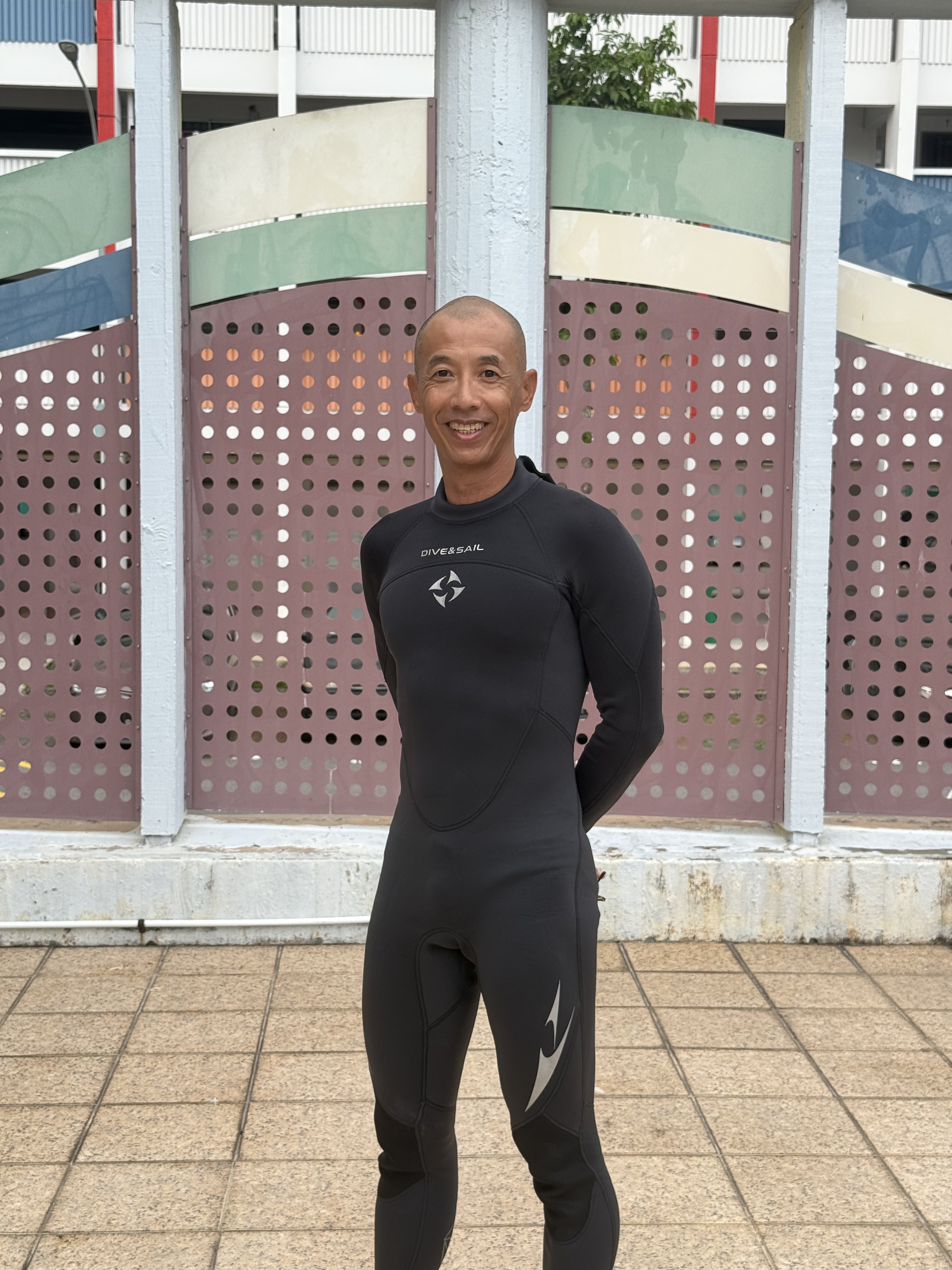
SWIM2000’s Bukit Canberra programme gives North Singapore families a local option. Coach David Lim is part of the SWIM2000 coaching team, and parents can use the programme information and FAQ to check practical details before starting.
Frequently Asked Questions
Can a complete beginner start SwimSafer at Bukit Canberra?
A complete beginner can start by developing the foundational water skills needed for later SwimSafer progression. The appropriate starting point should depend on the child’s current confidence and ability rather than age alone.
How do I know which SwimSafer stage my child should join?
Use the child’s demonstrated competencies as the starting point. A coach should assess what the swimmer can perform independently and identify the appropriate level or preparation pathway.
How long does it take to pass a SwimSafer stage?
There is no fixed duration that applies to every child. Starting ability, attendance, confidence, coordination, technique and the difficulty of the current skills all affect progression.
Should my child practise the assessment every lesson?
Not necessarily. Assessment-specific practice is useful, but children also need time to develop the individual skills that make the assessment tasks reliable. Rehearsal should not replace technique and water-safety development.
What if my child fails an assessment?
The useful next step is to identify which competencies were not yet consistent and train those areas. An unsuccessful assessment indicates that more development is needed; it should not change the objective of building reliable swimming ability.
Is Bukit Canberra suitable for families from Sembawang?
Its location can be practical for many families around Canberra and Sembawang. Parents should compare travel time and lesson schedules with their weekly routine before deciding.
When should my child consider stroke correction?
Focused stroke correction becomes relevant when the child is already an independent swimmer but a persistent technical fault is limiting efficiency or further progress.
Build the Swimmer, Not Just the Certificate
For families considering Bukit Canberra SwimSafer lessons, the certificate should be treated as a milestone rather than the entire objective.
The stronger outcome is a child who becomes progressively more confident, technically capable and independent in the water. That requires appropriate placement, consistent attendance, clear coaching and enough time for skills to become repeatable.
Choose a programme that fits the family’s routine, then judge progress by what the child can actually do. When the underlying swimming and water-safety skills improve, SwimSafer progression becomes the result of learning rather than the only target.
Ready to Start Swimming?
Book your first lesson with our certified coaches today. Suitable for all ages and skill levels.
Join Our Class NowTypically replies within minutes · No commitment required