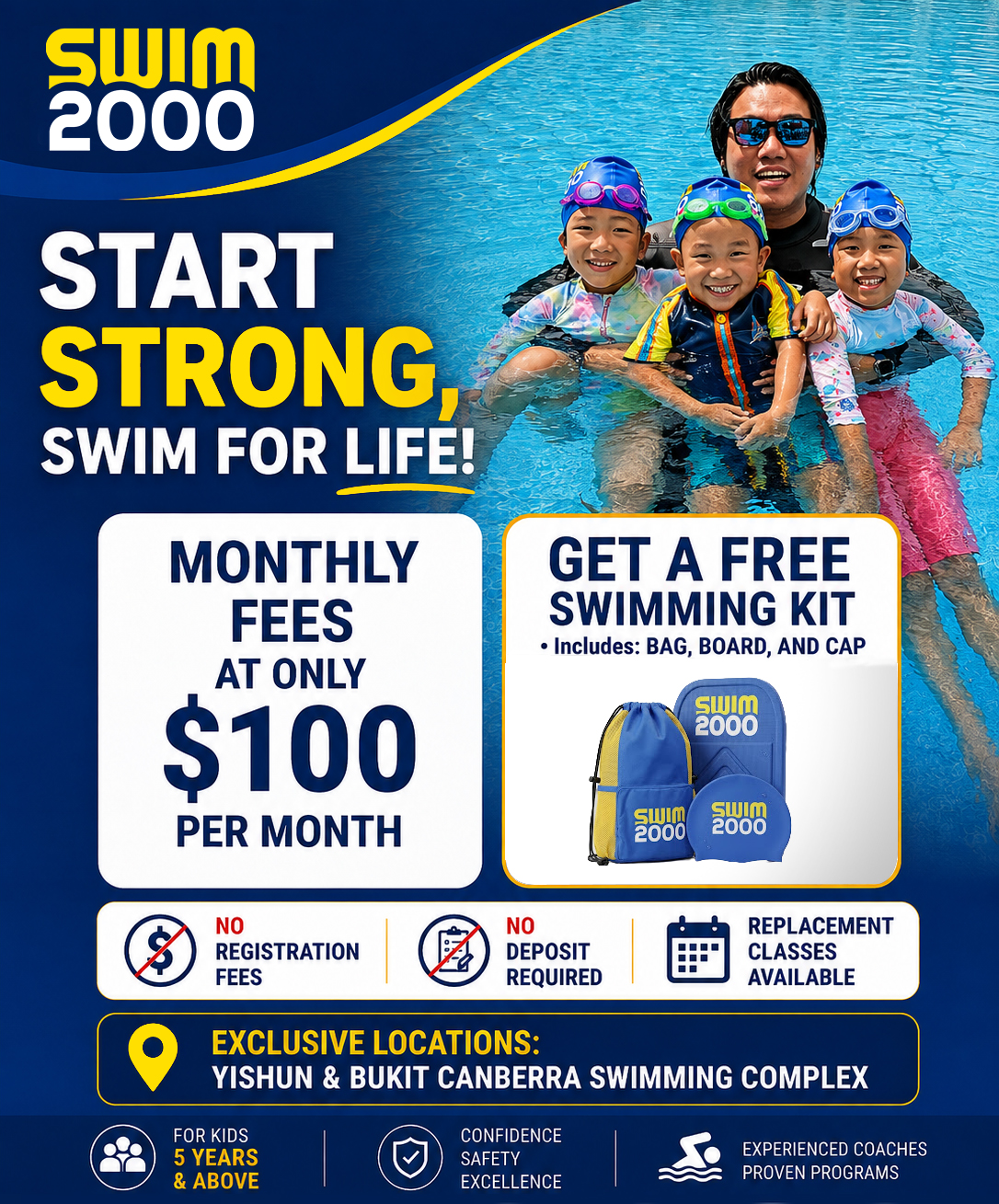
Bukit Canberra Swimming Complex: A Parent’s Guide Before You Go

Bukit Canberra Swimming Complex has become a swimming venue for families living around Canberra, Sembawang and the wider North Singapore area. For parents, choosing a pool is not only about finding the nearest place to swim. It is also about understanding which pool environment suits your child, how to prepare for a visit and whether recreational swimming or structured lessons are the better next step.
ActiveSG lists Bukit Canberra Swimming Complex at 21 Canberra Link and identifies it as an inclusive swimming facility. The complex is normally closed on Wednesdays for maintenance. Because operating arrangements can change, families should still check the latest ActiveSG information before travelling, especially on public holidays or when weather conditions are uncertain.
This guide focuses on the practical parent questions behind searches for Bukit Canberra Swimming Complex: what the facility is like, which swimmers may benefit from the different pool areas, how to prepare children for a first visit and when to consider formal swimming lessons instead of unstructured pool time.
What Makes Bukit Canberra Swimming Complex Different?
Bukit Canberra is part of a larger integrated community and sports hub in North Singapore. ActiveSG describes the swimming complex as having several types of pools, including an outdoor competition pool, a sheltered training or teaching pool, an outdoor children’s fun pool and a sheltered wading pool.
That variety matters because families do not all visit for the same reason. A confident swimmer may want to practise lengths. A younger child may simply need positive water exposure. A beginner attending lessons may need a controlled teaching environment where the coach can work on breathing, floating and basic movement.
Parents should therefore avoid treating the entire complex as one uniform swimming space. The most suitable area depends on the child’s current ability and the purpose of the visit.
Is Bukit Canberra Swimming Complex Suitable for Young Children?
It can be suitable for families with young children, but parents should judge suitability by swimming readiness rather than age alone.
A child who is excited to enter the pool may still be uncomfortable putting the face underwater. Another child may be able to float but panic when the feet cannot touch the floor. These differences are important because confidence in shallow water does not automatically translate into safety in a deeper pool.
For younger or nervous swimmers, the first objective should be positive and controlled water exposure. That may include entering the water calmly, blowing bubbles, holding the wall, moving short distances with support and learning how to regain a standing position.
Parents who are specifically looking for structured learning can review SWIM2000’s kids swimming lessons in Singapore rather than relying only on recreational pool visits.
Which Pool Should Your Child Use?
The right pool depends on what your child can already do independently.
Children who are new to water
A new swimmer should start in an environment where the child can remain calm and where an adult can supervise closely. The aim is not to complete a certain number of laps. It is to build familiarity with entering the water, submerging, floating and recovering safely.
Do not rush a child into deeper water simply because other children of the same age are swimming there. Water confidence develops through successful experiences, not comparison.
Children learning basic strokes
Once a child can move independently, pool time can be used to reinforce basic body position, kicking, breathing and stroke coordination. Short, controlled repetitions are often more useful than repeated full lengths performed with poor technique.
If you notice your child constantly lifting the head, stopping to breathe, kicking inefficiently or becoming exhausted very quickly, more distance may not solve the problem. Technique may need to be corrected first.
Stronger swimmers
A stronger swimmer who can maintain control over longer distances may benefit from lap swimming, provided the lane environment and facility rules are appropriate.
Parents should still supervise according to the child’s age and ability. Being able to swim one length does not necessarily mean a child is ready to handle fatigue, crowded lanes or an unexpected loss of rhythm.
What Should Parents Bring for a Visit?
A simple swimming bag is usually enough: suitable swimwear, goggles if the child uses them comfortably, towels, dry clothes and drinking water.
For younger children, organisation matters more than extra equipment. Keep wet and dry items separate and make sure the child understands what happens before and after the swim.
Avoid introducing unfamiliar training aids unless a coach has assigned them for a clear purpose.
If the child is attending a lesson, follow the coach’s instructions on what to bring rather than creating your own training setup.
How Should You Prepare a Nervous Child?
A first visit to a new swimming complex can feel overwhelming to a child who is already uncertain around water.
Explain the plan before arriving. Tell the child where you are going, that there will be different pools and that there is no requirement to perform a difficult skill immediately. Giving the child a predictable sequence can reduce anxiety.
Start with manageable tasks. Entering the water, holding the side and blowing bubbles may seem very basic, but these actions establish control. A child who is frightened should not be forced underwater or pushed away from the wall to “learn faster”.
If fear is persistent, a structured lesson can provide a more gradual progression. SWIM2000’s Bukit Canberra swimming lessons are designed around coached development rather than leaving parents to guess which skill should come next.
Recreational Swimming vs Swimming Lessons
Recreational swimming and swimming lessons have different purposes.
Family pool time can help a child become familiar with water, practise already-known skills and enjoy swimming without the structure of formal instruction. It can be very useful for confidence and repetition.
Lessons are more appropriate when the child needs systematic progression. A coach can observe errors that a parent may not recognise, choose drills for a specific weakness and decide when the swimmer is ready to move on.
For example, a child may appear to “know freestyle” because the child can cross the pool. A coach may notice that the swimmer is holding the breath, lifting the head and losing body position with every breath. Without correction, simply swimming more lengths can reinforce the same inefficient pattern.
The decision is therefore not recreational swimming or lessons forever. Many swimmers benefit from both: lessons for instruction and family pool time for comfortable practice.
What About SwimSafer Preparation?
Parents often associate swimming lessons with SwimSafer, but not every visit to Bukit Canberra Swimming Complex needs to become assessment preparation.
SwimSafer develops swimming and water-safety competencies through progressive stages. A child preparing for the programme should build the underlying skills consistently rather than rehearse an assessment only when the test is approaching.
If SwimSafer is your goal, review the SwimSafer programme in Singapore so you understand the broader progression.
Parents should also avoid using another child’s stage as the benchmark. Two children of the same age may have very different histories in the water. One may need more time on confidence while another is ready for more complex survival and stroke skills.
How Location Affects Swimming Progress
For families around Canberra and Sembawang, a nearby pool can make regular swimming easier to sustain. Swimming is a motor skill, so consistent practice helps reinforce breathing, body position and coordination.
The “best” location is therefore not necessarily the pool with the most features. It is one the family can attend consistently and where the swimmer can practise at an appropriate level. Families comparing northern options can also review swimming lessons in Yishun.
Safety Still Comes Before Practice
Stay attentive when children are in or around the water. Follow lifeguard instructions, observe facility rules and leave the water when directed. Young children and weak swimmers should remain within immediate reach of a supervising adult when appropriate.
Safety also means knowing when to stop. A tired child who is repeatedly losing technique is unlikely to benefit from “one more length”.
When Does a Child Need Stroke Correction?
Some children reach a point where general swimming practice is no longer enough.
Typical signs include a stroke that remains tiring despite regular swimming, a repeated breathing problem, a breaststroke kick that produces little propulsion, difficulty maintaining body position or a technique fault that prevents progression.
At that point, the issue is not simply lack of practice. The swimmer may need targeted feedback.
SWIM2000’s stroke correction clinic is intended for swimmers whose main limitation is an established technical problem rather than basic water confidence.
Coach Jack Lee is part of the SWIM2000 coaching team. The value of coached correction is that practice becomes specific: the swimmer knows what needs to change instead of simply repeating more laps.
Frequently Asked Questions
Where is Bukit Canberra Swimming Complex?
ActiveSG lists Bukit Canberra Swimming Complex at 21 Canberra Link, Singapore 756973, within the Bukit Canberra community and sports development.
Is Bukit Canberra Swimming Complex closed on Wednesdays?
ActiveSG currently lists Wednesday as the regular maintenance closure day. Check the latest facility information before travelling because public-holiday and operational arrangements can change.
Does Bukit Canberra have pools for children?
ActiveSG describes the complex as including an outdoor children’s fun pool and a sheltered wading pool, alongside training and competition pools. Parents should still choose an area appropriate to the child’s actual swimming ability.
Is Bukit Canberra Swimming Complex suitable for beginners?
Yes, beginners can use the facility, but the appropriate pool and level of supervision depend on water confidence and swimming ability. Children needing structured progression may benefit from formal lessons.
Can my child prepare for SwimSafer at Bukit Canberra?
Children can develop the swimming and water-safety skills relevant to SwimSafer through structured training. Assessment readiness should be based on consistent competency rather than simply spending more time in the pool.
Should my child practise swimming outside lessons?
Additional pool time can be useful when the child practises skills already understood. Avoid repeatedly practising an incorrect movement. Ask the coach what the swimmer should focus on between lessons.
Make the Pool Fit the Swimmer
Bukit Canberra Swimming Complex offers families in North Singapore several different swimming environments in one location. That makes it useful for recreation, skill practice and structured swimming development, but the facility itself does not determine how well a child progresses.
Start with the swimmer’s current ability. Choose an appropriate pool area, keep the first visit manageable, supervise actively and use recreational practice to reinforce skills rather than force new ones.
If your child needs a structured learning path, use the convenience of Bukit Canberra as a way to support consistency. A suitable location, regular attendance and coaching that matches the swimmer’s needs are a stronger combination than simply trying to accumulate more time in the water.
Ready to Start Swimming?
Book your first lesson with our certified coaches today. Suitable for all ages and skill levels.
Join Our Class NowTypically replies within minutes · No commitment required