Why Is Swimming Good for Children? Physical, Safety and Confidence Benefits in Singapore
Why swimming matters during childhood
Swimming gives children a way to move, play and develop practical skills in water. For families in Singapore, where public pools and aquatic activities are readily available, learning to swim can be both a useful life skill and a regular form of exercise. Its value goes beyond completing a lap: children learn how their bodies behave in water, how to follow safety instructions and how to approach unfamiliar tasks.
The benefits are real, but they should not be exaggerated. Lessons cannot make a child drown-proof, and swimming alone does not guarantee better grades, stronger immunity or exceptional athletic ability. The strongest reasons to learn are water competence, enjoyable physical activity and gradual confidence built through practice.
1. Swimming builds water competence and safer habits
A child who can float, control breathing, turn and move towards a safe exit has more options in an unexpected water situation than a child who has never practised those skills. Structured lessons can introduce safe entry and exit, awareness of depth, recognising limits and responding to instructions.
Water competence is broader than swimming a fixed distance. A child might swim comfortably in a familiar pool yet become distressed in deeper water, when tired or after an unexpected splash. Parents should ask instructors which situations their child has practised, rather than treating one certificate as proof of universal safety.
Supervision remains essential. An adult should actively watch children around water, including children who have passed assessments. Do not rely on flotation toys as substitutes for supervision or appropriate safety equipment. Pool rules, buddy awareness and knowing when to call for help are as important as stroke technique.
Singapore’s SwimSafer programme offers a structured framework for learning water safety and swimming skills. Families can explore the SwimSafer programme in Singapore and ask providers how their lessons relate to the relevant stage. Assessment expectations should be checked against current official programme requirements rather than assumed from a child’s age.
2. Swimming offers whole-body physical activity
Moving through water involves coordinated work from the arms, legs and trunk. Kicking, pulling, floating and changing body position challenge different movement patterns. Water also supports body weight, making swimming feel different from running or jumping on land.
Regular practice can contribute to children’s overall physical activity, cardiovascular fitness and muscular endurance. The actual benefit depends on lesson intensity, duration, attendance and what the child does outside the pool. A short beginner class with frequent rest periods should not be presented as equivalent to a continuous training session.
Swimming is one option within an active childhood, not a replacement for all other exercise. Land-based play, running, climbing and games also develop useful movement skills. A balanced routine leaves time for sleep, school, family and unstructured play.
What parents can observe
Look for improvements in comfort and movement rather than focusing only on speed. A beginner may first learn to exhale into water without panicking, then maintain a horizontal body position, then coordinate a short kick and arm movement. These small changes are meaningful progress.
3. Swimming develops coordination and body awareness
Swimming asks children to manage several actions at once: breathing, balance, propulsion and direction. A freestyle learner, for example, must eventually coordinate a flutter kick, alternating arm movements and a breath without losing body position.
These skills usually develop in stages. An instructor may isolate one element, such as kicking while holding a float, before combining movements. Repeating manageable drills helps children notice what happens when they lift their head, relax their body or change the timing of a kick.
Not every child progresses at the same pace. Differences in prior exposure, comfort, attention and physical development matter. Comparing siblings or classmates by the number of lessons attended can obscure genuine improvements in control and confidence.
4. Swimming can strengthen confidence through achievable challenges
For some children, putting their face in water is the first major hurdle. For others, it is leaving the wall, floating independently or attempting a new stroke. A supportive lesson breaks each challenge into achievable steps and allows a child to experience progress.
Confidence in this setting comes from evidence: the child discovers that a skill which felt difficult last month is now manageable. This does not mean swimming automatically transforms a shy child into an outgoing one. It means the pool can provide repeated opportunities to practise persistence and self-assessment.
Parents can support this process by praising specific effort. “You kept blowing bubbles even when it felt strange” is more useful than promising that the child will be the fastest swimmer. Avoid forcing a frightened child into deep water to accelerate progress. Discuss persistent fear with the instructor and adjust the approach.
5. Lessons encourage listening and routines
Group or individual swimming lessons give children a setting in which instructions have immediate practical meaning. They may need to wait for a signal, stay in a designated area, take turns and stop an activity when asked.
These behaviours support safe participation and can make the lesson more productive. Children also learn practical routines: preparing goggles and swimwear, showering, listening to feedback and caring for equipment. These are modest but useful forms of independence.
A good class should not depend on harsh discipline. Clear boundaries, age-appropriate explanations and consistent expectations help children understand what to do and why. Parents can reinforce the same messages without turning every session into a performance review.
6. Swimming creates opportunities for social interaction
In a group class, children may practise beside peers with different abilities. They learn to share space, take turns and encourage one another. For some, regular sessions become a familiar weekly activity that makes the pool less intimidating.
The social benefit depends on class structure and the child’s temperament. A very large class with limited individual attention may not suit a nervous beginner. A smaller group or one-to-one arrangement can be useful initially, with group lessons considered later as comfort grows.
Swimming does not need to become competitive to remain worthwhile. Children can enjoy recreational swimming, develop solid water skills and stay active without entering races.
When should children start swimming lessons?
There is no single age that guarantees readiness. Children vary in their ability to follow directions, cope with water on their face and participate safely in a class. Some begin with parent-supported water familiarisation, while others start structured instruction when they can manage simple instructions and short periods of attention.
For younger children, focus on positive exposure and safe habits rather than rushing through formal strokes. For school-age beginners, an instructor can assess comfort, breath control and basic movement before suggesting an appropriate group.
If a child is reluctant, ask what specifically worries them. Fear of submerging the face requires a different response from discomfort with a noisy pool or separation from a parent. A suitable instructor should adapt the starting point instead of assuming all beginners need identical drills.
How to choose lessons in Singapore
Start with the child’s current ability and the family’s practical constraints. A convenient location and consistent schedule can matter more than an ambitious promise of rapid progression. Consider whether the class teaches water safety as well as strokes, how feedback is given and how the instructor manages children at different levels.
Ask what a typical beginner lesson looks like. How much time is spent actively practising? How are children helped when they are afraid? How does the instructor decide when to introduce deeper water or a new skill? What happens if a child misses several sessions?
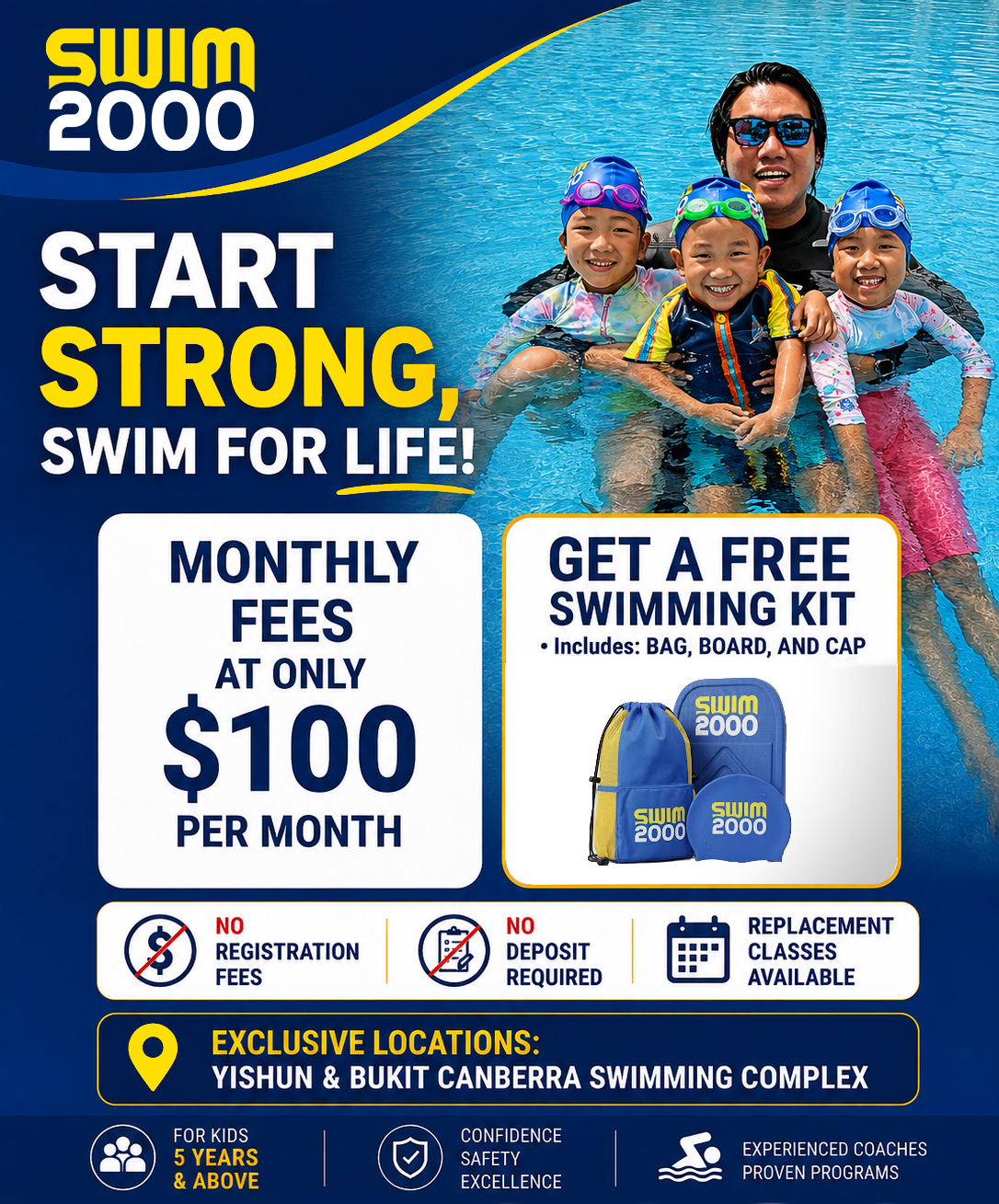
Parents looking at options can review kids’ swimming lessons in Singapore. Families in the north may also find information about Yishun swimming lessons and Bukit Canberra swimming lessons. These pages describe lesson options; this guide focuses on the developmental reasons for learning.
How often should a beginner practise?
Consistency generally helps skills become familiar. A regular weekly lesson can provide structure, while additional supervised practice may help a child retain simple movements. More sessions are not automatically better if the child is exhausted, distressed or losing interest.
Keep informal practice brief and purposeful. A parent might reinforce a safe entry routine, bubble blowing or a relaxed float only when conditions are appropriate and the child is willing. Avoid teaching techniques that conflict with the instructor’s current progression. Ask what is safe to practise between lessons.
What swimming cannot promise
Swimming has meaningful benefits, but parents should be cautious of sweeping claims. No lesson schedule guarantees that every child will master all four strokes by a certain date. Progress depends on starting ability, attendance, coaching, practice and comfort in water.
Swimming also does not eliminate drowning risk. A competent swimmer can still face danger from fatigue, unexpected conditions, poor decisions or inadequate supervision. Water safety is an ongoing habit, not a qualification that removes the need for vigilance.
Finally, competitive performance is a separate goal. A child who enjoys swimming for recreation and safety is not falling behind simply because they do not train for races. If competitive swimming becomes interesting later, families can evaluate the additional time and training commitment then.
Frequently asked questions
Is swimming good for children who are not sporty?
Yes. Children do not need to enjoy ball games or running to benefit from learning water skills. A patient instructor can adjust drills to the child’s comfort and ability. The initial goal can simply be feeling safer and moving more confidently in water.
Does swimming help children become more confident?
It can help children build confidence in specific water tasks as they practise and succeed. The effect varies by child and should not be promised as a general personality change. Calm instruction and manageable challenges matter.
Is one swimming lesson per week enough?
One weekly lesson can be a reasonable starting routine. Progress depends on lesson quality, the child’s readiness and opportunities for safe practice. Ask the instructor whether additional supervised practice would be helpful for the particular skills being taught.
Should my child learn SwimSafer or swimming strokes first?
Water safety and swimming skills can be taught together in an age-appropriate progression. Ask the provider how its lessons address foundational water confidence, safety knowledge and stroke development. Check current SwimSafer requirements before planning for a particular assessment.
Can a child who is afraid of water learn to swim?
Often, yes, through gradual familiarisation and patient instruction. Begin with the source of the fear rather than forcing submersion or deeper-water tasks. If fear persists, discuss a slower progression or a different class format with the instructor.
How do I know my child is improving?
Watch for specific changes: calmer breathing, better balance, independent movement over short distances, listening to safety cues and recovering after mistakes. Ask the instructor for concrete feedback instead of relying only on distance or certificates.
The practical takeaway for parents
Swimming is valuable because it combines a potentially lifesaving skill with enjoyable movement and opportunities for gradual learning. The most useful early milestones are often simple: entering safely, breathing calmly, floating with control and following pool instructions.
Choose a lesson environment where your child can practise consistently, receive clear feedback and build competence without unnecessary pressure. Keep supervising around water even as skills improve. Over time, a child may gain fitness, confidence and a lasting recreational activity, but the first priority remains safe, capable participation.
Ready to Start Swimming?
Book your first lesson with our certified coaches today. Suitable for all ages and skill levels.
Join Our Class NowTypically replies within minutes · No commitment required