Child Scared of Water: How to Build Swimming Confidence Without Rushing

A child scared of water does not need to be pushed into swimming faster. The first objective is to make the water predictable enough that the child can stay calm, follow instructions and recover from small mistakes without panic.
For Singapore parents, fear can appear in different ways. One child may refuse to put the face in the water. Another may enter happily but panic when the feet leave the pool floor. Some children can swim a short distance yet become anxious in deeper water. These are different problems and should not be treated with the same drill.
The useful starting point is to identify exactly what the child fears, then build confidence through small skills that the child can repeat successfully. This guide explains how that progression works and what parents should look for in swimming lessons for a fearful beginner.
Why Some Children Are Scared of Water
Fear of water is not one single behaviour. A child may be uncomfortable because the environment feels unfamiliar, because water has entered the nose before, because floating removes the feeling of standing securely, or because a previous experience felt out of control.
The visible reaction may be the same: gripping the wall, refusing to submerge, crying before class or repeatedly asking to leave the pool. The cause matters because the coaching response should address the specific trigger.
A child who dislikes water on the face needs gradual submersion and breathing practice. A child who fears losing contact with the floor needs balance and recovery skills. A child who is comfortable in shallow water but anxious in deeper water needs a progressive introduction to depth rather than more stroke practice.
Parents should therefore avoid using distance as the first measure of progress. A fearful beginner who learns to exhale calmly, float with less support and return independently to the wall may have made more meaningful progress than a child who completes several metres while tense and panicking.
Water Confidence Comes Before Stroke Technique
Freestyle, breaststroke and backstroke require the swimmer to manage breathing, balance and body position while moving. Those tasks become much harder when the child is focused mainly on avoiding submersion.
Water confidence is the foundation that allows technical learning to begin. A confident beginner does not need to be fearless. The child needs enough control to attempt a skill, make a mistake and recover without immediately abandoning the task.
That is why early lessons may look simple. Blowing bubbles, floating, turning back to the wall and moving short distances are not wasted time. They teach the child that common situations in the pool are manageable.
Families looking for a structured beginner pathway can review kids swimming lessons in Singapore. The objective at the beginning should be repeatable control, not speed through a syllabus.
Start by Identifying the Exact Fear
Parents and coaches can learn a great deal by observing when the child becomes anxious.
Fear of putting the face in water
This often appears before any swimming movement begins. The child may keep the chin high, wipe the face repeatedly or refuse to blow bubbles.
Progress should begin with controlled contact. The child can practise getting the mouth wet, then exhaling at the surface, then placing more of the face into the water. The aim is to make exhalation familiar rather than asking for a long submersion immediately.
Fear of floating
Floating requires the child to trust buoyancy while reducing muscular tension. A frightened child often becomes stiff, which makes the skill feel less stable.
Support should be reduced gradually. The coach may first provide secure assistance, then lighter contact, then ask the child to hold the position briefly before recovering to standing.
The recovery is important. Children become more willing to float when they know how to finish the skill safely.
Fear of deep water
A child may be confident while standing but anxious as soon as the pool becomes deeper than their height. This is not necessarily a stroke problem.
Before asking the child to swim farther, the coach can develop wall recovery, controlled floating, treading-related confidence and short movements where a secure endpoint is obvious.
Fear after a previous bad experience
If a child remembers swallowing water, slipping, being unexpectedly submerged or feeling unable to reach the wall, the next lessons should rebuild predictability. Repeating the frightening situation immediately at higher intensity is unlikely to create useful confidence.
What Good Confidence-Building Lessons Look Like
A suitable lesson for a fearful child should have clear, manageable steps. The swimmer should know what is being attempted and where safety or recovery is available.
Progress may include:
- entering the pool calmly;
- holding and moving along the wall;
- wetting the face voluntarily;
- blowing bubbles with controlled exhalation;
- submerging briefly and returning to standing;
- floating with support;
- recovering from a float;
- moving a short distance toward the coach or wall;
- repeating the same skill with less assistance.
The sequence is not a fixed timetable. One child may move through several steps in one lesson. Another may need repeated sessions before a particular action becomes comfortable.
The key test is whether the child is gaining control. A successful repetition should make the next attempt feel more predictable.
What Parents Should Avoid
Do not surprise the child with submersion
A child who is already anxious benefits from knowing what will happen. Unexpectedly putting the face underwater can reinforce the idea that the pool is uncontrollable.
Do not compare the child with classmates or siblings
Statements such as “your younger sister can already do this” add pressure without teaching a skill. Water confidence develops from successful experience, not comparison.
Do not promise an assessment date too early
Parents sometimes focus on how quickly a child can reach SwimSafer Stage 1. For a fearful beginner, the more useful question is whether the child can perform foundational skills calmly and repeatedly.
The SwimSafer programme in Singapore is competency-based in practice: confidence and control need to support later swimming and water-safety tasks.
Do not turn every family pool visit into a lesson
Extra water exposure can help, but children also benefit from relaxed, positive experiences in the pool. Parents do not need to correct technique continuously. Simple supervised play can make the environment more familiar.
How Parents Can Help Outside Lessons
Parents can support confidence without becoming the technical coach.
Before class, describe the lesson neutrally rather than warning the child that something will be difficult. After class, ask what felt easier than last time instead of asking only how far the child swam.
During recreational pool visits, repeat familiar confidence skills that the coach has already introduced. Keep the activity short enough that the child finishes while still comfortable.
Parents can also help by maintaining regular attendance. Long gaps may make an unfamiliar swimmer feel as though they are starting again. Consistent exposure gives the coach more opportunities to build from the previous lesson.
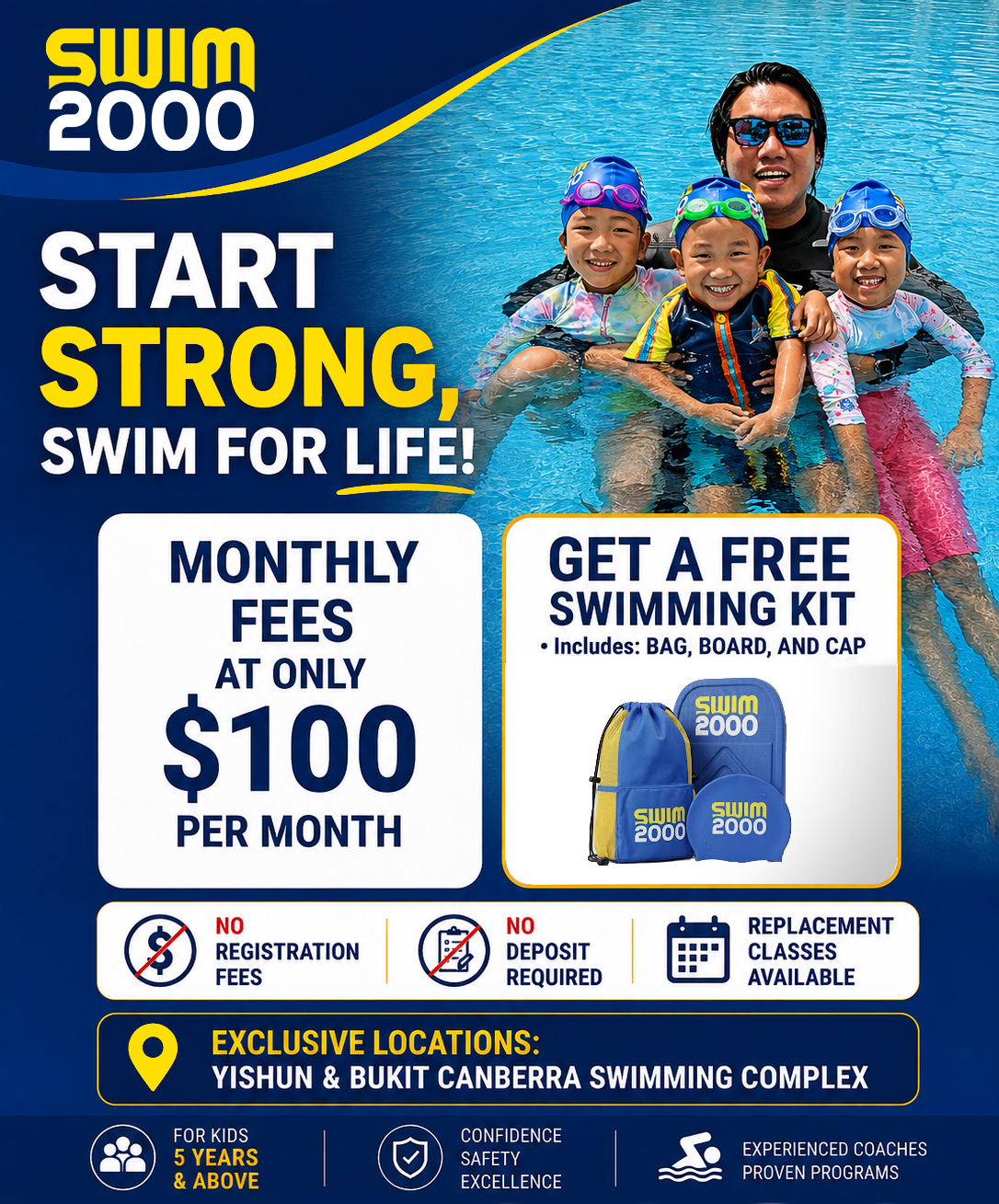
For families in North Singapore, SWIM2000 conducts swimming lessons in Yishun and swimming lessons at Bukit Canberra. A practical location can make consistency easier for families managing school and other activities.
When Should a Child Start Learning Strokes?
Stroke instruction can begin once the child has enough water control to learn without fear dominating the movement.
There is no requirement for perfect confidence first. The child should, however, be able to manage basic submersion, breathing and recovery well enough to focus on a new instruction.
If a child lifts the head during freestyle because breathing mechanics are weak, that is a technical problem. If the child lifts the head because putting the face in water feels unsafe, more stroke correction alone will not solve the underlying issue.
Good coaching distinguishes between those causes.
As confidence improves, the swimmer can gradually combine body position, kicking, breathing and arm movements. Correct technique is easier to build when the child is relaxed enough to feel what the body is doing.
Group Lessons or Individual Attention?
A fearful child does not automatically require private lessons.
A well-matched group can help because children observe peers completing the same activities safely. That can reduce uncertainty and make a new skill feel normal.
However, the group must be manageable and the child must be able to participate safely. If the swimmer needs constant physical assistance or becomes overwhelmed by the pace of the class, more individual attention may be useful until basic confidence improves.
The deciding factor should be the child’s actual learning need rather than the assumption that one format is always superior.
How to Measure Progress in a Fearful Beginner
Parents should look for behavioural and skill changes, not only swimming distance.
Useful signs include:
- entering the pool with less hesitation;
- releasing the wall voluntarily;
- putting the face in water without repeated prompting;
- exhaling instead of holding the breath;
- floating with lighter support;
- recovering to standing independently;
- moving toward the wall without panic;
- attempting a new skill after an unsuccessful first try;
- following the coach’s instruction while in deeper water.
These changes show that the child is gaining control. Distance and stroke development can follow from that foundation.
Coach Jack Lee and the SWIM2000 coaching team work within a technique-first progression where confidence, breathing and body control support later stroke development rather than being treated as separate concerns.
When Fear May Need a Different Approach
If a child becomes increasingly distressed despite gradual instruction, the coach and parent should review what is triggering the reaction. The class environment may be too advanced, the progression may be moving too quickly, or the child may need a period of simpler familiarisation.
Changing the task is not the same as giving up. A smaller step can provide the successful repetition needed before returning to the original skill.
Parents should also distinguish ordinary hesitation from a pattern where the child cannot participate at all. The coaching plan should be adjusted to the swimmer who is actually present, not to an expected timetable.
Frequently Asked Questions
Should I force my child to put their face in the water?
No. The skill should still be taught, but through controlled progression. Start with comfortable water contact and breathing, then increase submersion as the child gains control.
How long does it take a child to overcome fear of water?
There is no fixed duration. Progress depends on the cause of the fear, previous experience, attendance, age and how consistently the child can practise successful steps.
Can a child who is scared of water join group swimming lessons?
Yes, if the group level and supervision are suitable. Some children benefit from seeing peers complete the same skills. Others may initially need more individual attention.
Is fear of deep water the same as not knowing how to swim?
No. A child may know basic strokes but still feel anxious when unable to stand. Deep-water confidence requires recovery, flotation and controlled movement as well as stroke ability.
Should parents practise swimming skills between lessons?
Parents can reinforce familiar confidence activities under close supervision, but technical corrections are better coordinated with the coach so the child receives consistent instructions.
Can SwimSafer help a fearful child?
SwimSafer provides a structured progression, but the child should build genuine confidence and competency rather than being rushed toward an assessment. The appropriate stage depends on demonstrated ability.
Where can a fearful beginner learn in North Singapore?
SWIM2000 runs programmes at Yishun Swimming Complex and Bukit Canberra Swimming Complex. The suitable class depends on the child’s current confidence and swimming ability.
Build Control First, Then Build Distance
When a child is scared of water, the fastest-looking route is often not the most useful one. Pushing immediately toward full strokes or longer distances can hide the underlying fear without resolving it.
A stronger progression makes the water predictable. The child learns how to breathe, float, recover and move in small repeatable steps. Each successful repetition reduces uncertainty and gives the swimmer more attention to spend on technique.
For parents, progress should be measured by increasing independence and control. Once those foundations are stable, stroke learning and SwimSafer development become much easier to build on top of them.
Ready to Start Swimming?
Book your first lesson with our certified coaches today. Suitable for all ages and skill levels.
Join Our Class NowTypically replies within minutes · No commitment required